
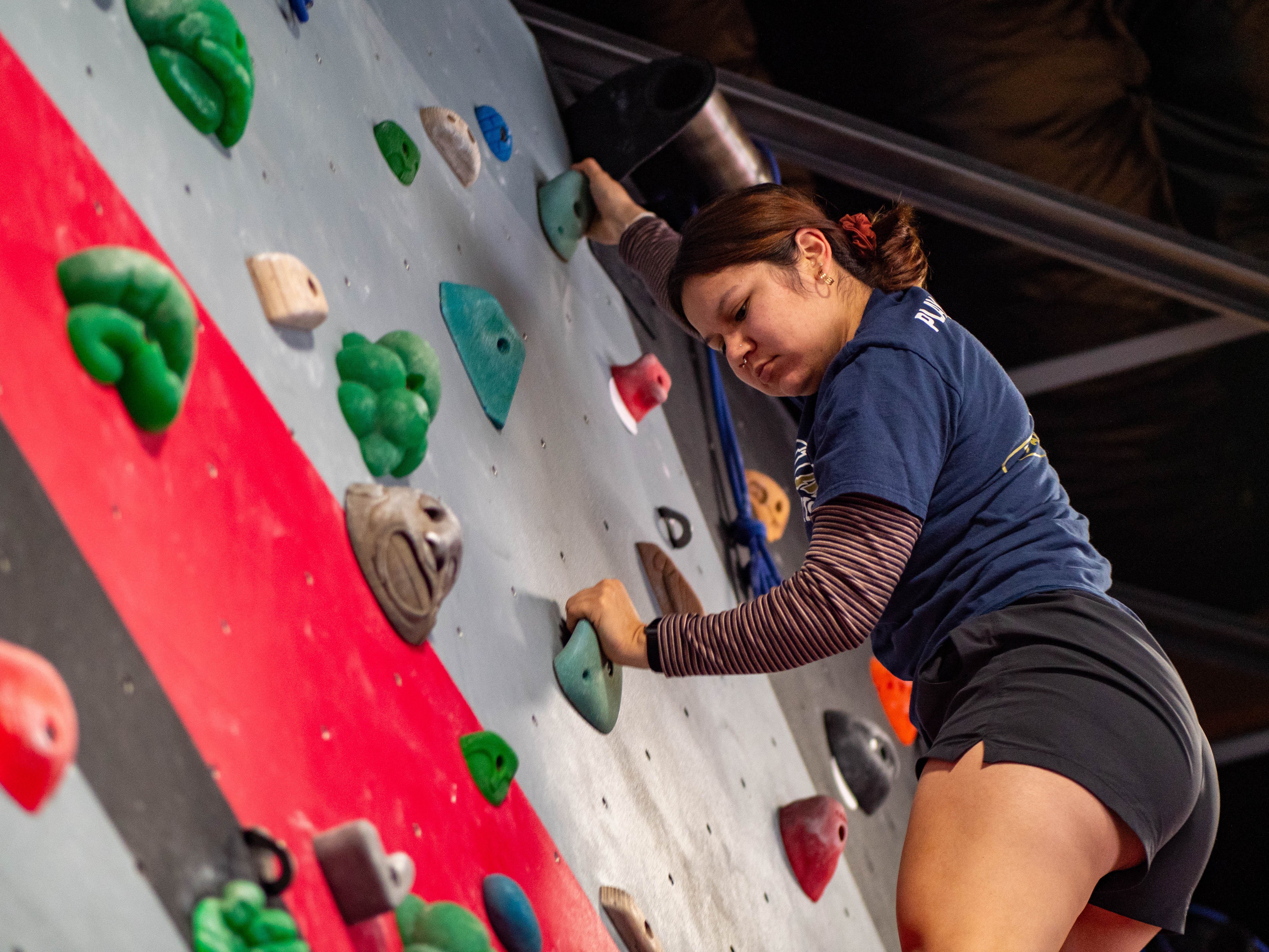
The force of gravity is indifferent to things like race or sexual identity. A climber, regardless of background, must give their full effort when attempting a difficult route – or else they’ll be pulled back to the ground.
However, to climb or to fall mattered little at last Friday’s Black, Indigenous, People of Color (BIPOC) Climbing Meetup, as the camaraderie and encouragement, by friends and strangers alike, remained the same.
The BIPOC Climbing Meetup filled Seaside’s climbing gym, Sanctuary Climbing and Fitness, with both new and experienced climbers from California State University, Monterey Bay (CSUMB). Though 20 students signed up, more appeared to be in attendance. The event, hosted in joint partnership between CSUMB’s Recreation Department and Otter Cross Cultural Center (OC3) was the latest installment of OC3’s Inclusive Climbing Series, following last week’s Queer Ascents Panel.
“A lot of these spaces haven’t always been accessible to people of different identities or backgrounds [such as] black, indigenous, people of color, women, people in the LGBTQIA+ community,” said fourth-year Destiny Guzman, adventure education leader for the Recreation Department.
In a sport traditionally dominated by cisgender, heterosexual, white men, the Inclusive Climbing Series hopes to create welcoming, accessible spaces to foster diversity and inclusivity in the climbing community.
“When I started climbing in 2019, I didn’t really feel like I belonged in the community. I’m Hispanic and I just kind of felt like I didn’t belong there,” said Guzman.
With events like the BIPOC Climbing Meetup, “we try to help [students] feel more comfortable and kind of break down those barriers. [We want] to make it seem accessible to students that maybe haven’t ever climbed in their lives,” said Guzman.
A major barrier to making climbing more accessible is the cost of gear and gym memberships. The OC3 “has taken into account that not everyone can afford to come [to the climbing gym], so OC3 covers the cost of everyone so that they can come here free of charge,” said third-year Bella Pelayo. “They can get their feet in the water so that they can have this experience without any financial restraints.”
Many students expressed that going climbing as part of the BIPOC meetup group played a large role in making the sport feel more accessible.
“It’s a lot less scary to have an event like this where you’re going to know so many people here … it makes it feel safer,” said third-year Violet Delgado. “I probably wouldn’t come here on my own, but once I started it was like, ‘Oh, this is a really cool place to be,’ Everyone’s so friendly.”
“It’s crazy to see all these people come to climb because you go around school and you hardly see anyone,” said third-year Brandon San Luis.
He continued, “I look around the gym right now and everyone’s chatting it up with friends, pushing each other to top out or get that last hold. It’s really nice to see.”