
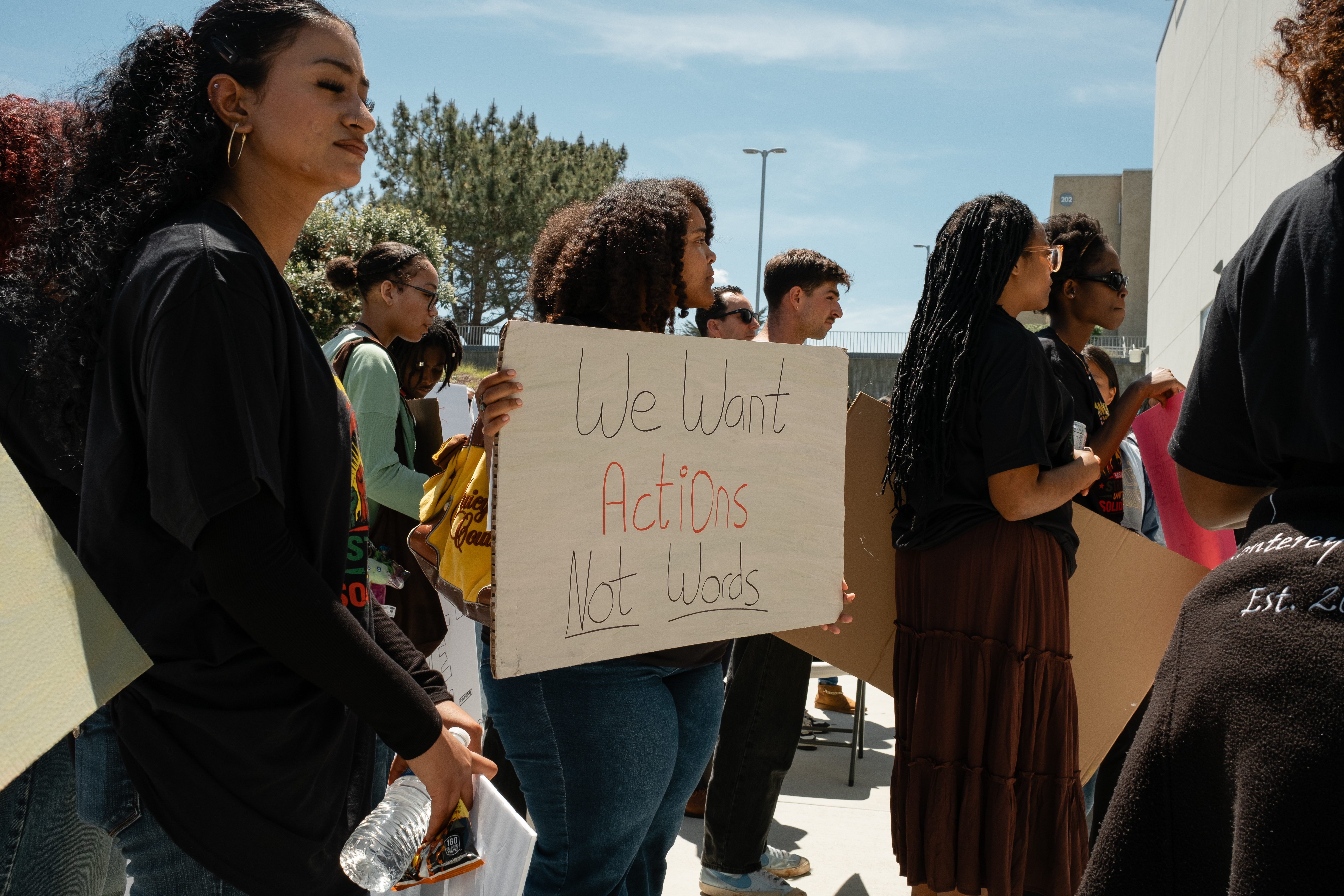
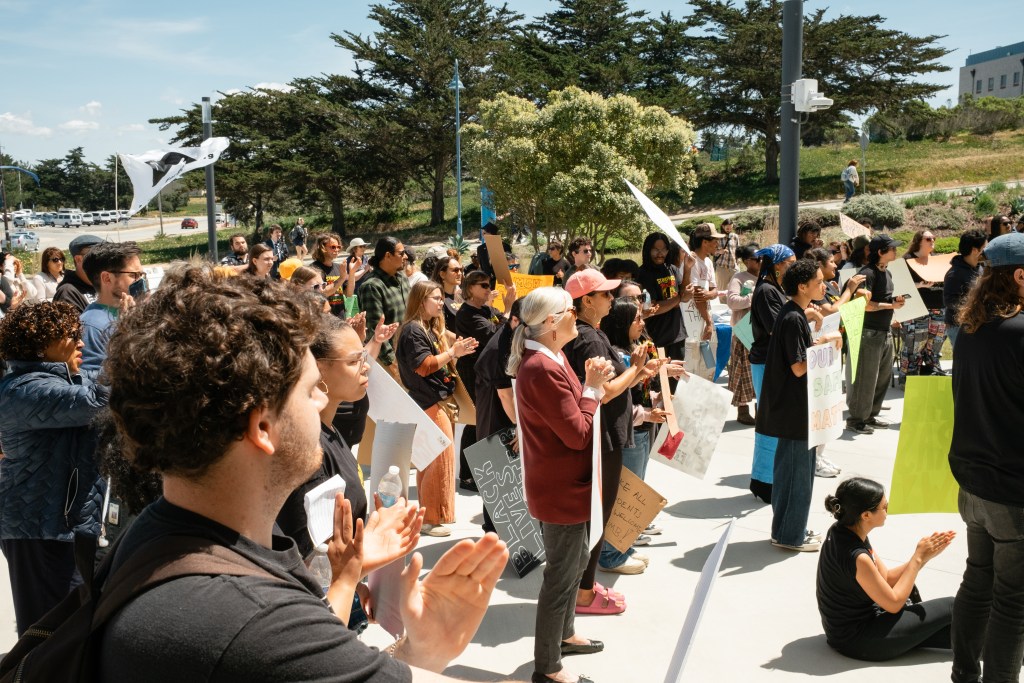
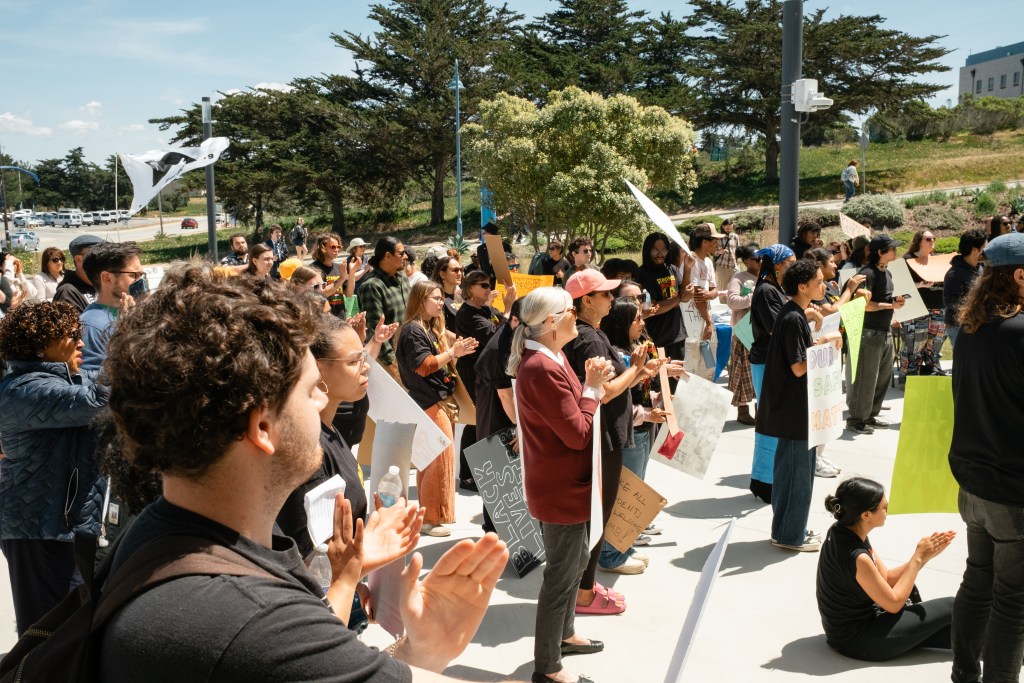
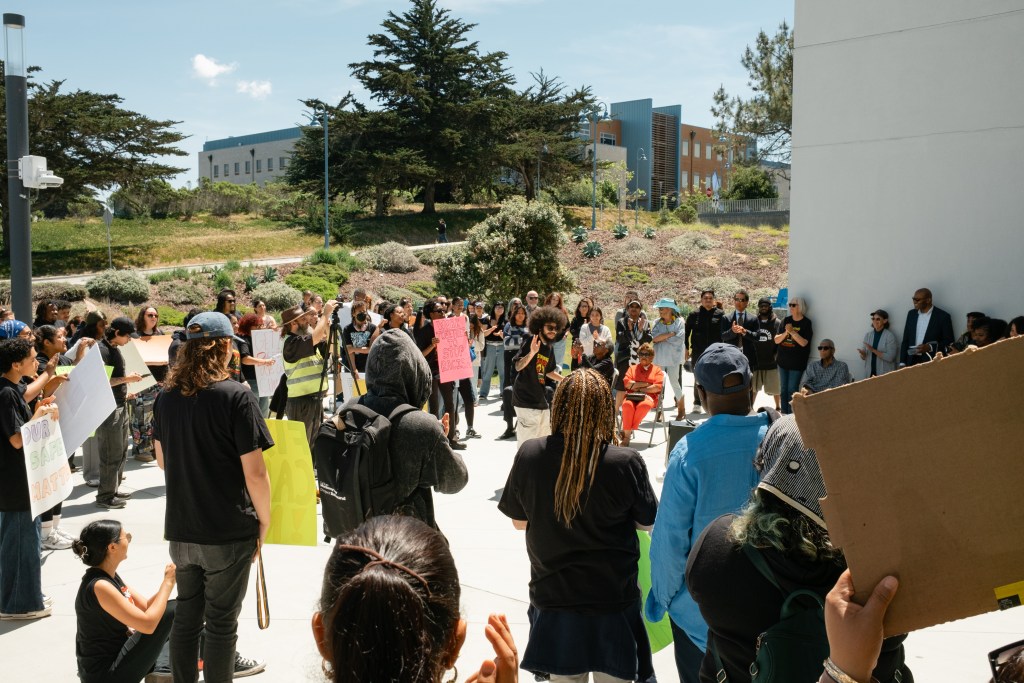
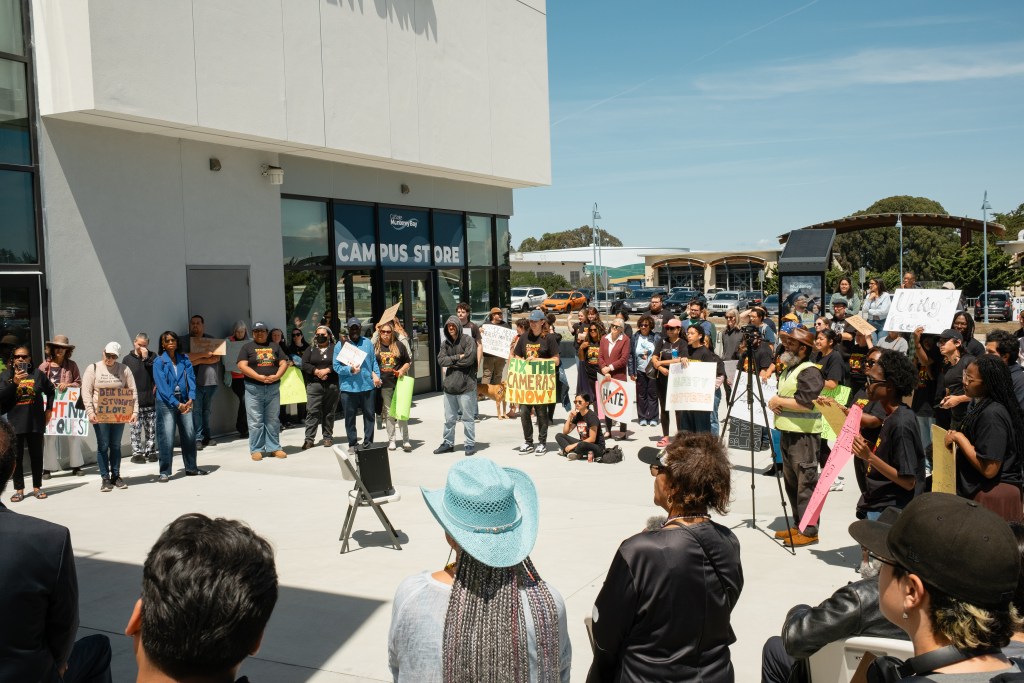
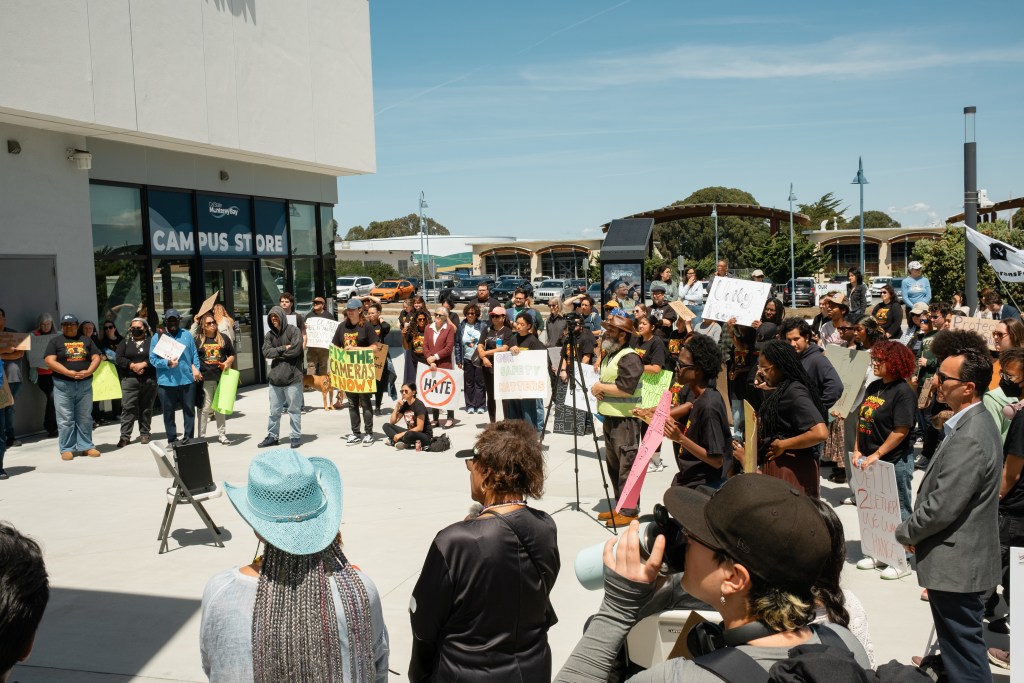
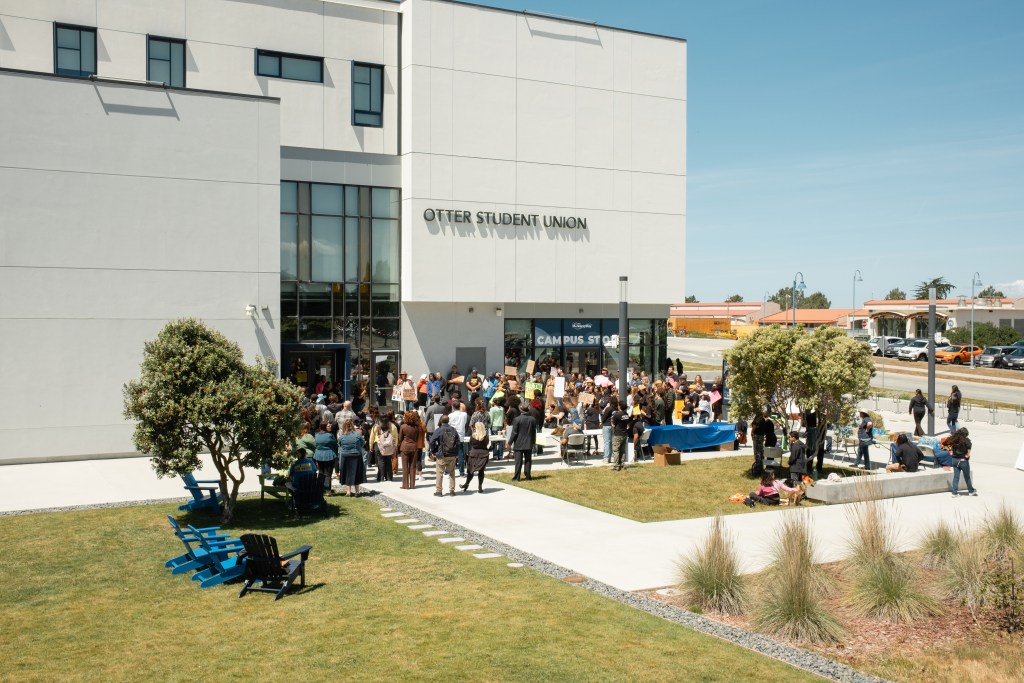
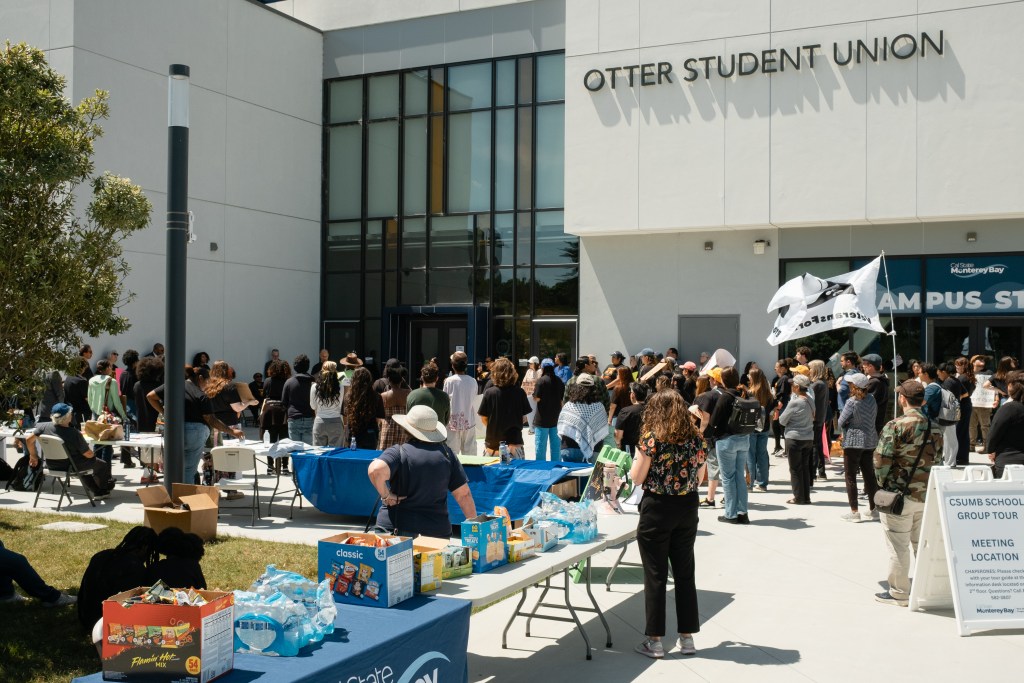
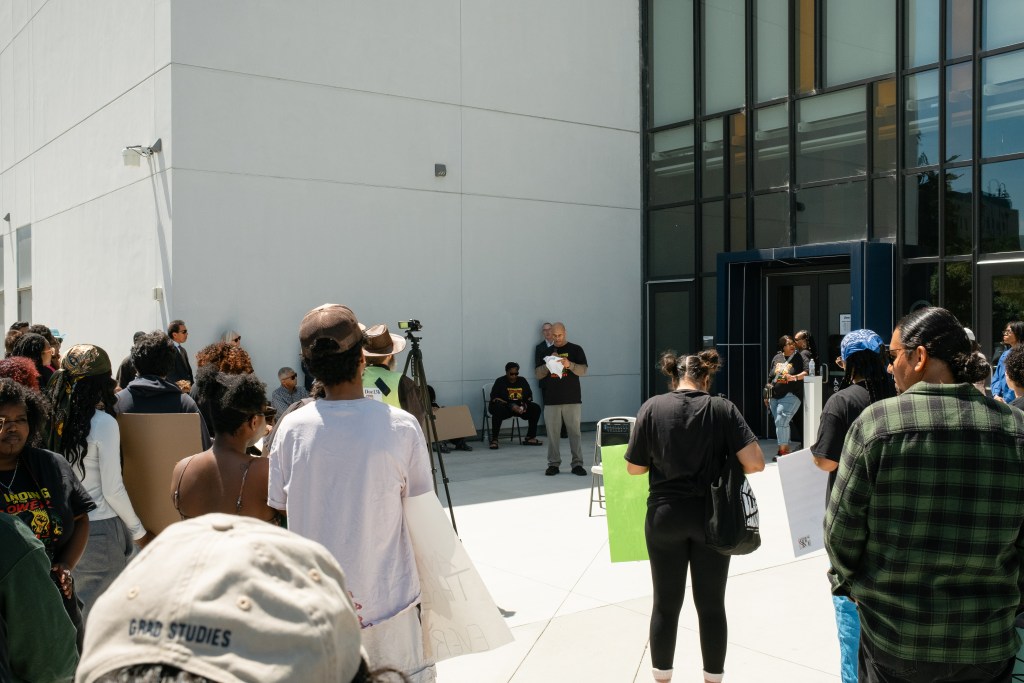
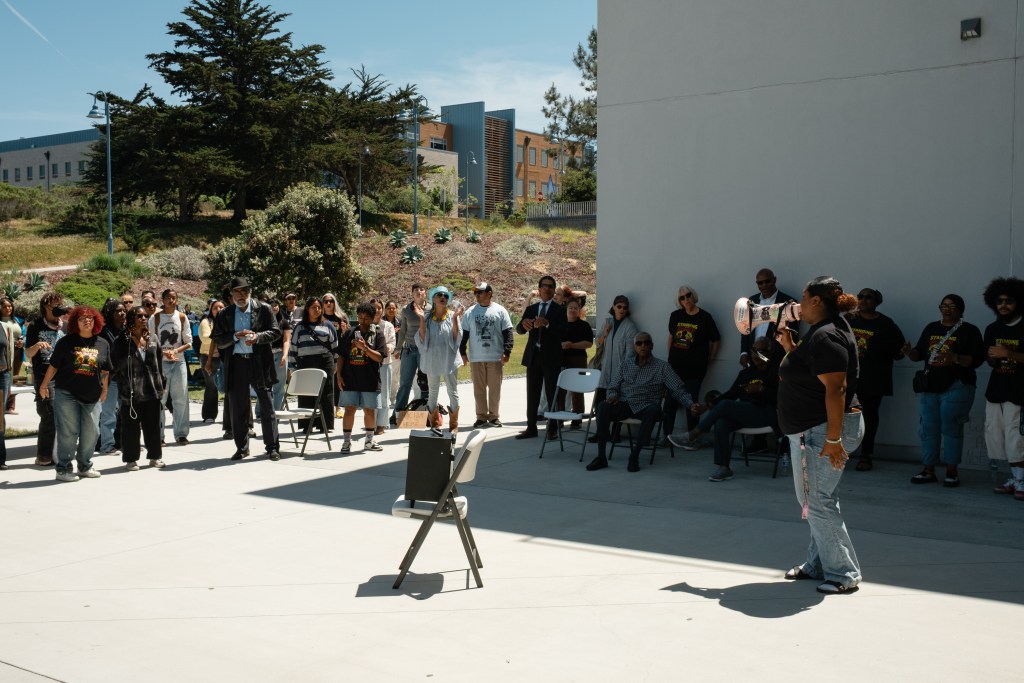
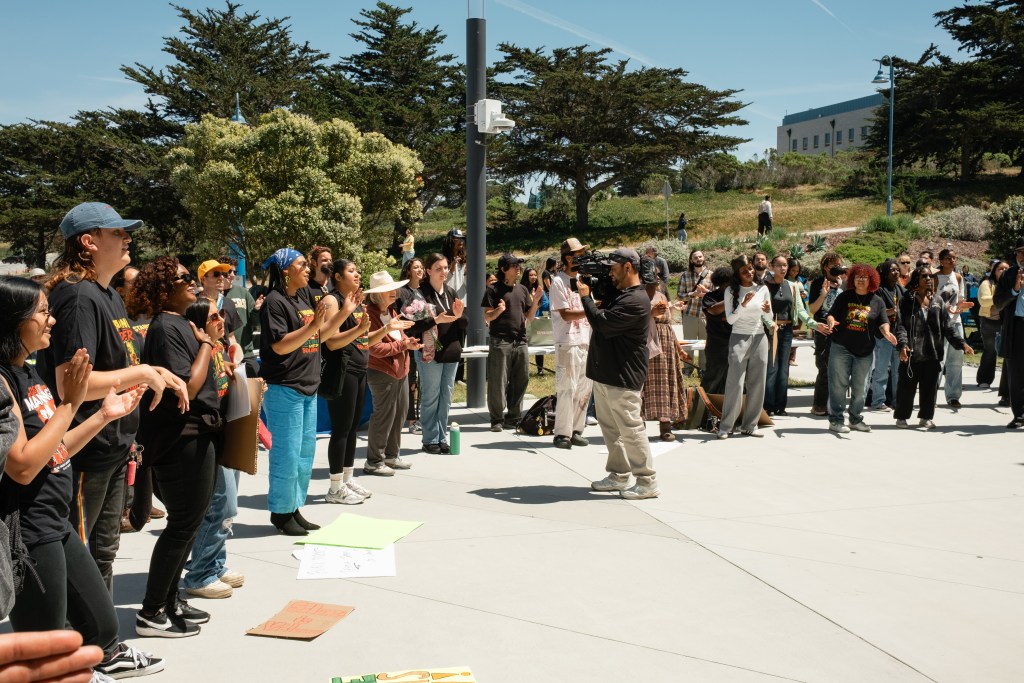
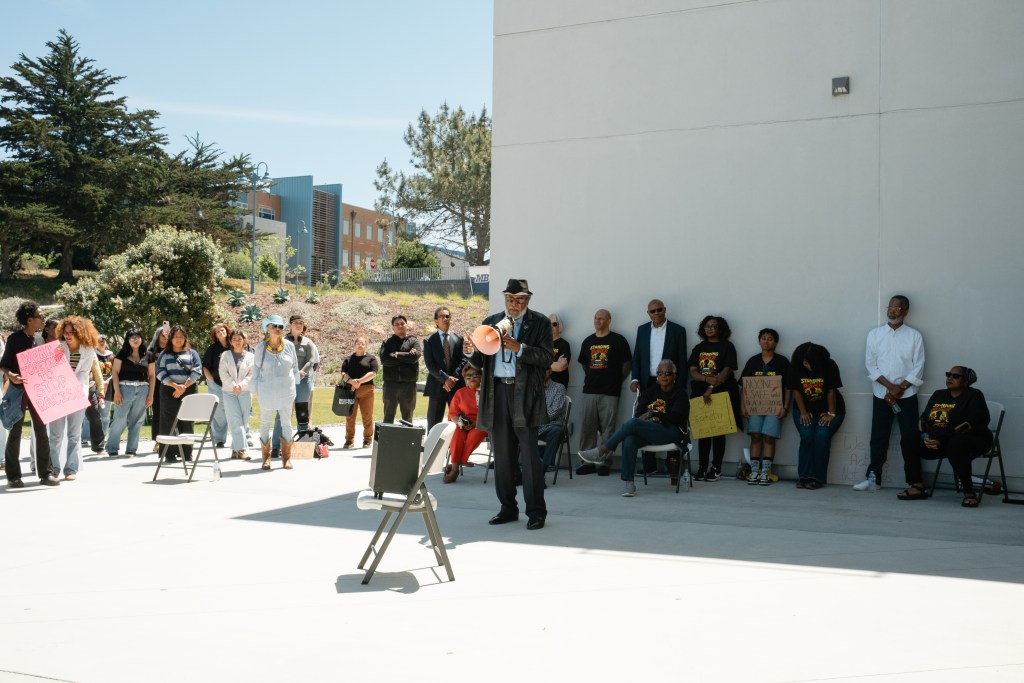
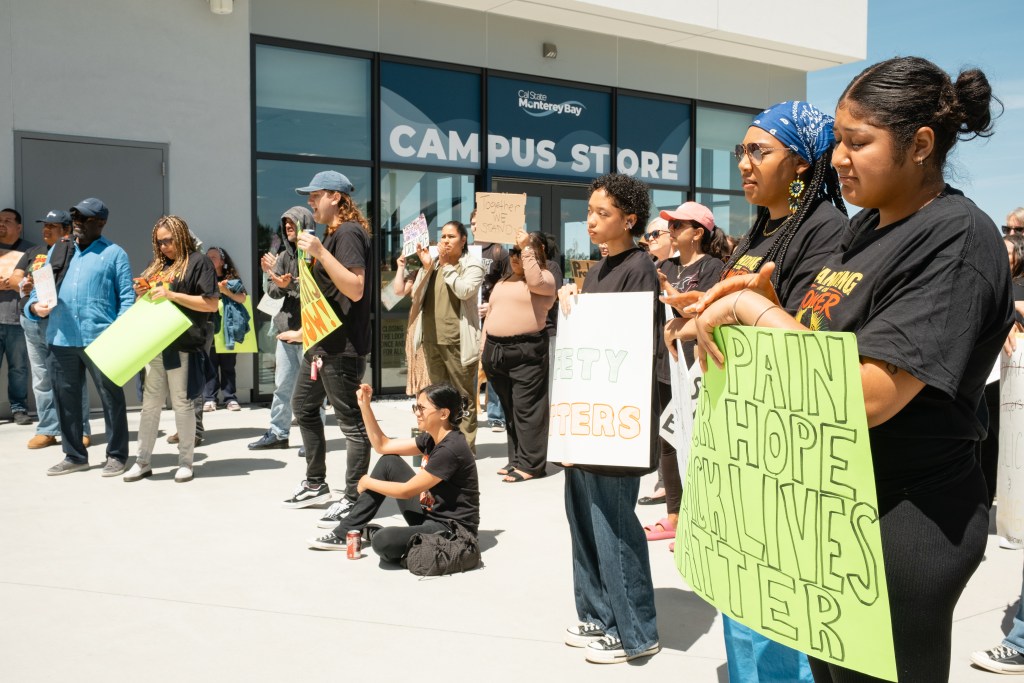
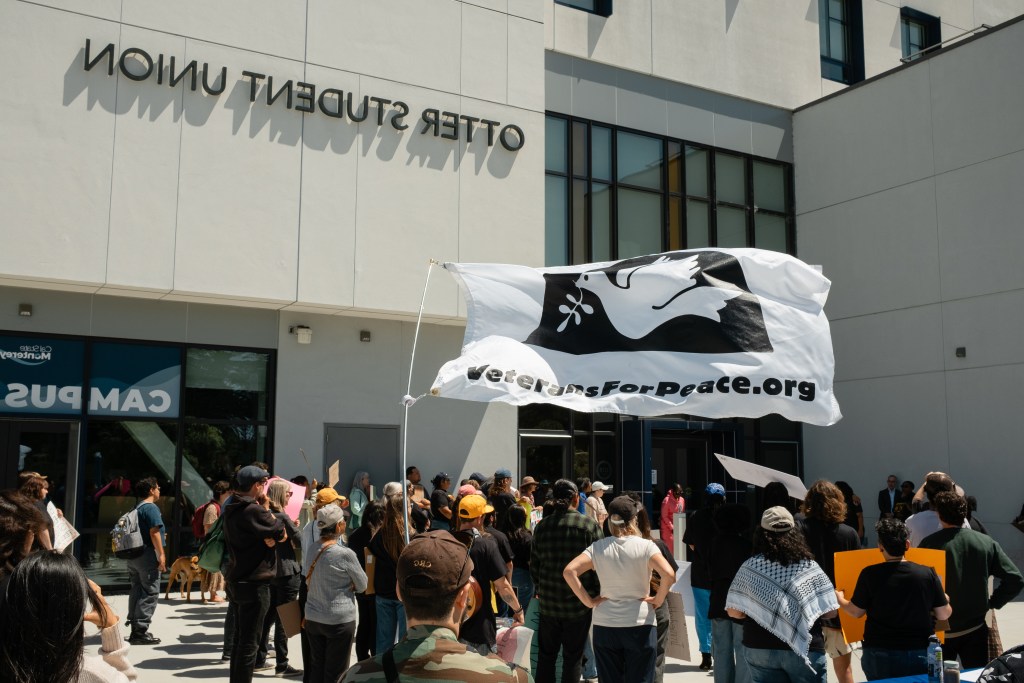
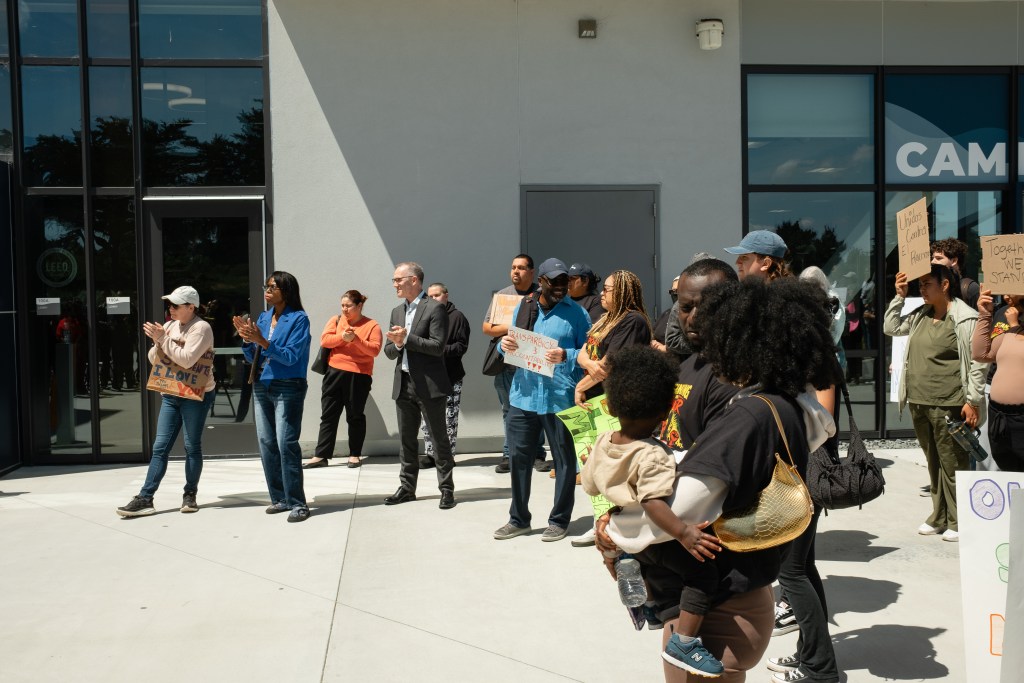
A crowd of over 80 gathered last Thursday behind the Otter Student Union to protest the treatment of black students and faculty on campus and to stand in solidarity with them. The protest was an outcry not just by the student body, but by alumni and community leaders, many for whom this protest is just one in a very long series of battles for their safety.
“I’m not f—ing afraid of you, I’m not afraid,” announced student Amaya Watson as a challenge to the individual who put graffiti on the dorm doors with the n-word last fall. Her words resonated with a crowd, many who said they were weary of repeated incidents of bigotry on campus, including anti-blackness, homophobia and islamophobia.
“We should not have to have these kinds of events in this day and time,” said event speaker Mel Mason, a longtime civil rights activist, Seaside councilman and former member of the Black Panther Party.

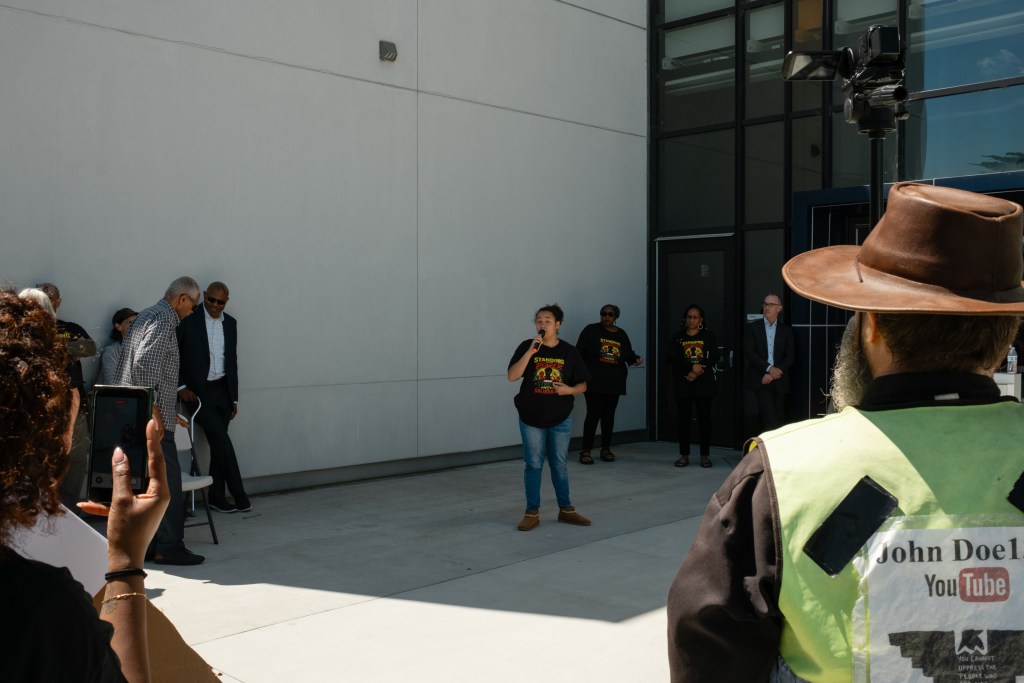
Among the crowd were student leaders such as Deejay Thornton of the Black Student Union as well as community figures like District 4 Monterey County Supervisor Wendy Root Askew, Regina Mason of the Village Project and Deja Robinson of the Monterey County Black Caucus. Together they spoke for over an hour about the issues facing black students at CSUMB, and how to make progress.
McKenna Coleman spoke to share her experience coming in as a freshman “excited to make new friends and new memories” only to find someone had written “fuck n—– b—–” on her door. She was one of many affected last October by a string of graffiti in Promontory housing. For her, the experience was incredibly stressful, but she also acknowledges it could be worse.
“I’m happy that they are gonna be putting in cameras, there should be more than that though, there should be more precautions to keep students safe. There’s probably people out there who had horrible things done to them because of the color of their skin, because they look like me and/or darker, things could have been a lot worse,” said Coleman. “I wouldn’t want anybody to go through the things I did.”
Many Black students stepped up to share their experience feeling unsafe and unwelcome. Some said they’re afraid to go to class.
Sophomore biology major Ashanti Johnson expressed her fear that the student who sprayed the graffiti might be sitting next to her during class. “I haven’t gone to classes as much,” said Johnson. “I really don’t know if it’s you sitting next to me.”
According to the Black Student Union, these issues are not merely individual but systemic. Most recently, one given to Associated Students called for “a need to address systemic racism on campus as well as in the community.”
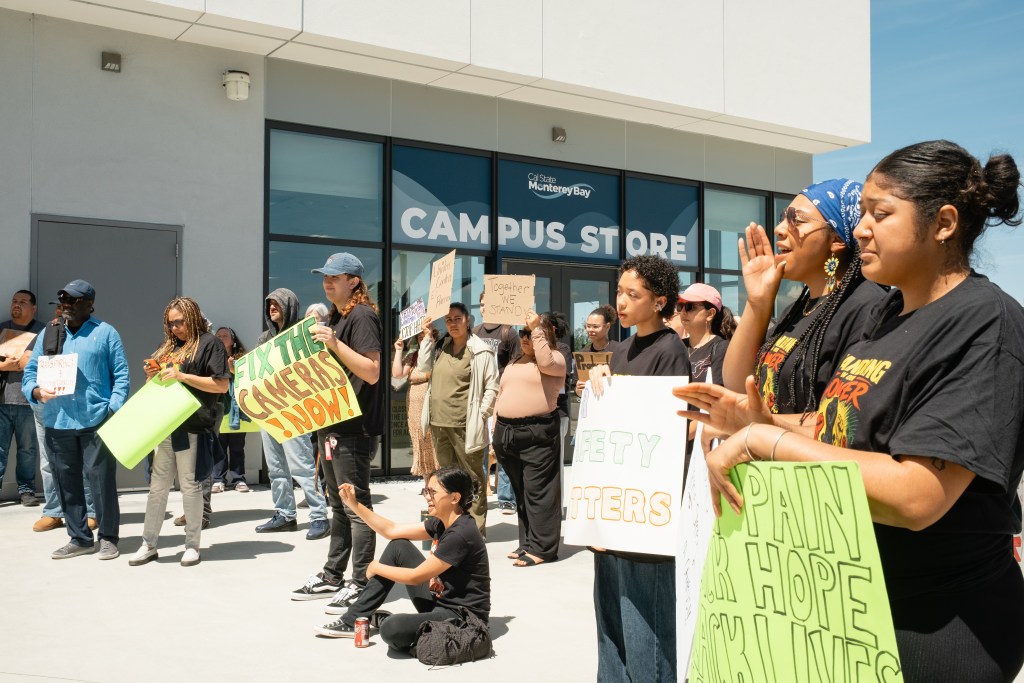
“We understand racism does not end overnight, but it is important to us that we visibly see steps to address the anti-blackness,” says the statement.
“I’m challenging [CSUMB President] Vanya [Quinones], while you are here sista, you are president of this college and you have the responsibility of the safety of every single student on this campus, especially black students, because they are under attack,” said Mason.
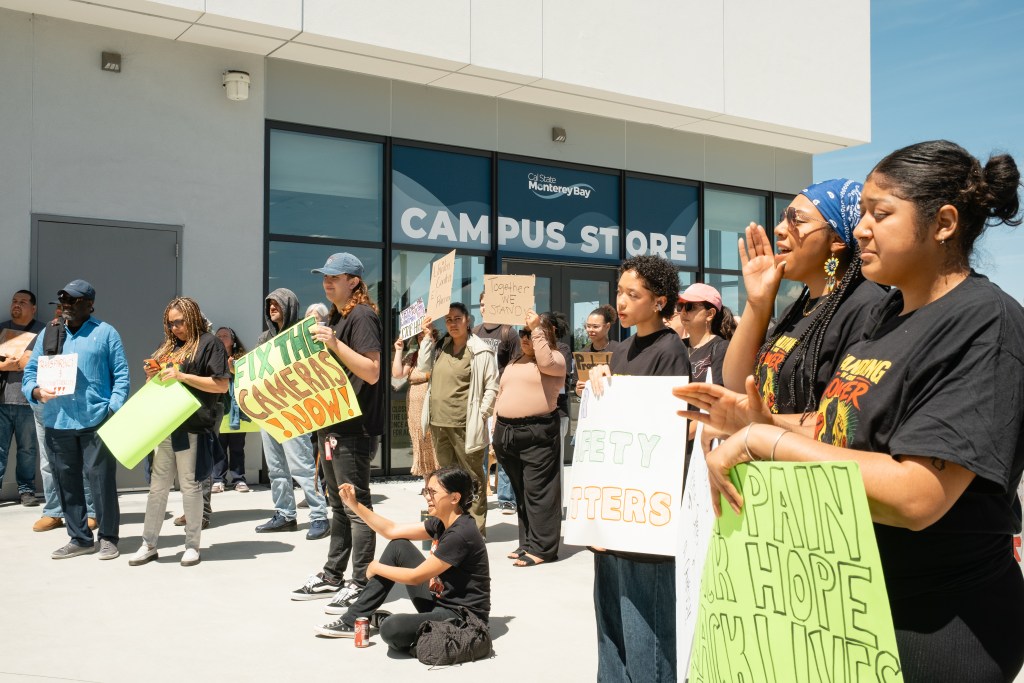
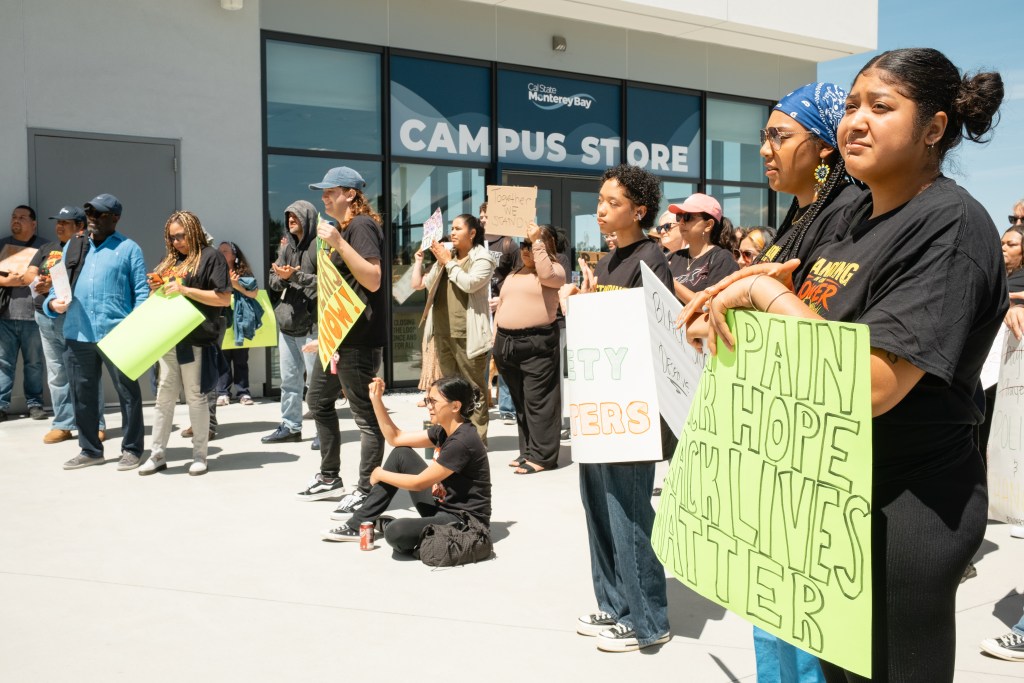
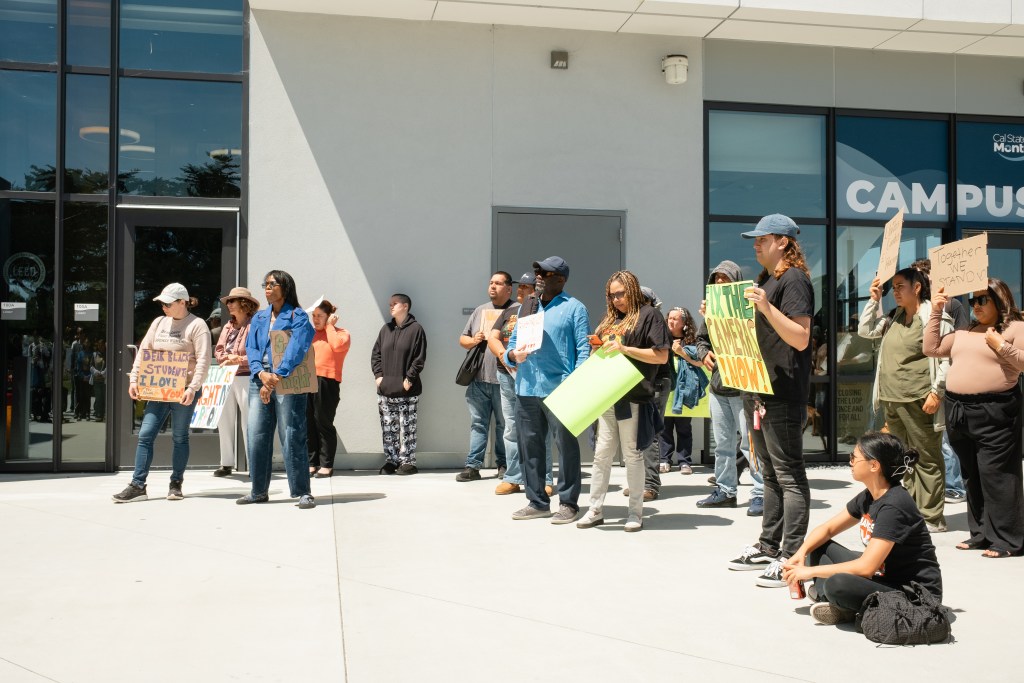
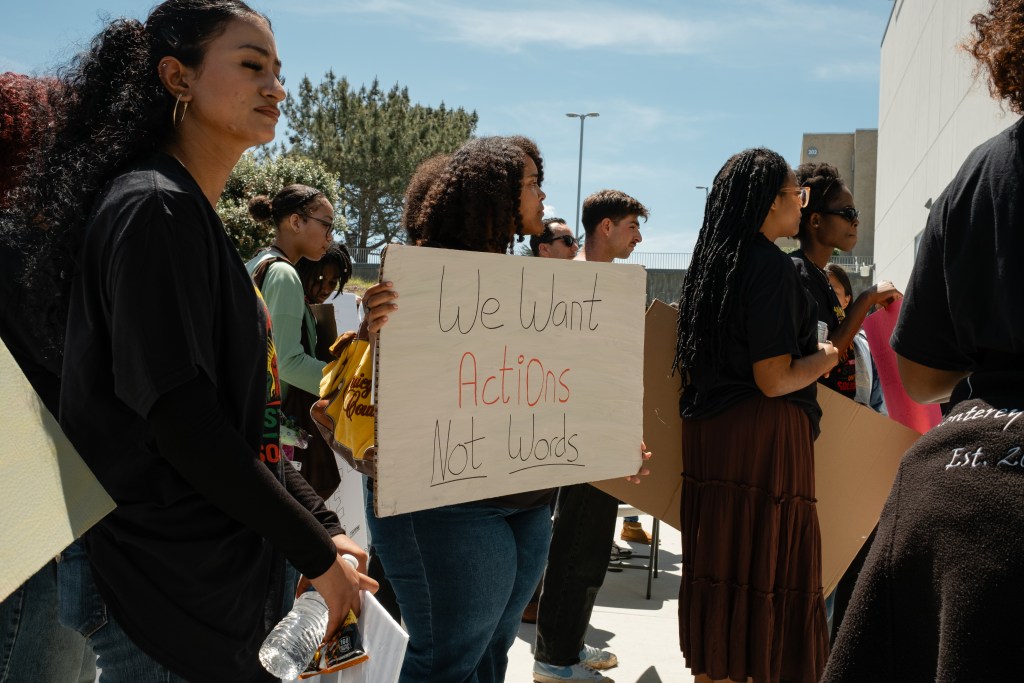
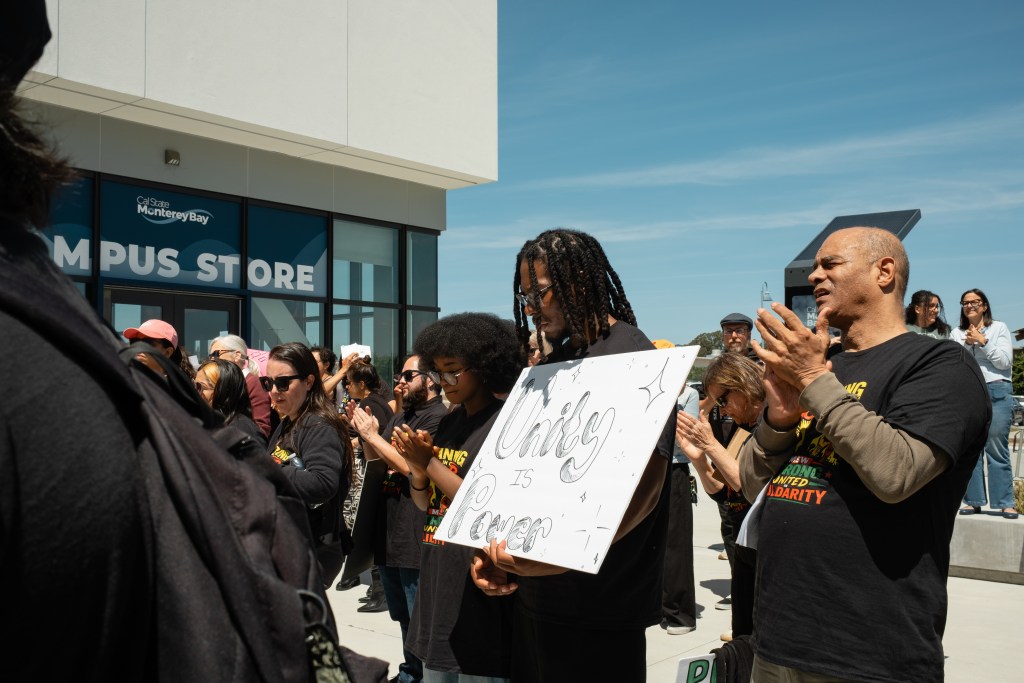
Signs bore messages calling for accountability and showing solidarity like “No more empty promises,” “Protect our community,” “accountability now,” “black minds matter,” and “unidos contra el racismo.”
A student leader who went by “Mister” gave three key action items for protest.
- “To bring awareness to the ongoing experiences of black students who are being targeted and feel unsupported by administration.”
- “To show that the community is united in action.”
- “And to affirm that black students on this campus deserve to feel safe and supported.”
Protestors did acknowledge progress made by administration on key action items like microaggression training and cameras in the Promontory dorm building. But BSU President Thornton made it clear that the burden of change does not solely lie in a list of demands to administration.
“The BSU has been working tirelessly to meet with the university to make demands and to make change,” said Thornton, “but we need other students to stand with us, we need other students to hold our community accountable.”
A growing burden on Black Students
For black students and all students who have felt victimized on campus, this issue is not new.
“It kind of irritated me that people, not students but faculty and staff were astonished that this is something that happens. To us, if this didn’t happen back-to-back-to-back, we would have all probably moved on with our lives,” said Thornton in an interview last fall about the incident in Promontory. “We’re not surprised at all. A lot of us have been called racial slurs by other people on campus, have experienced racism in our classrooms.”
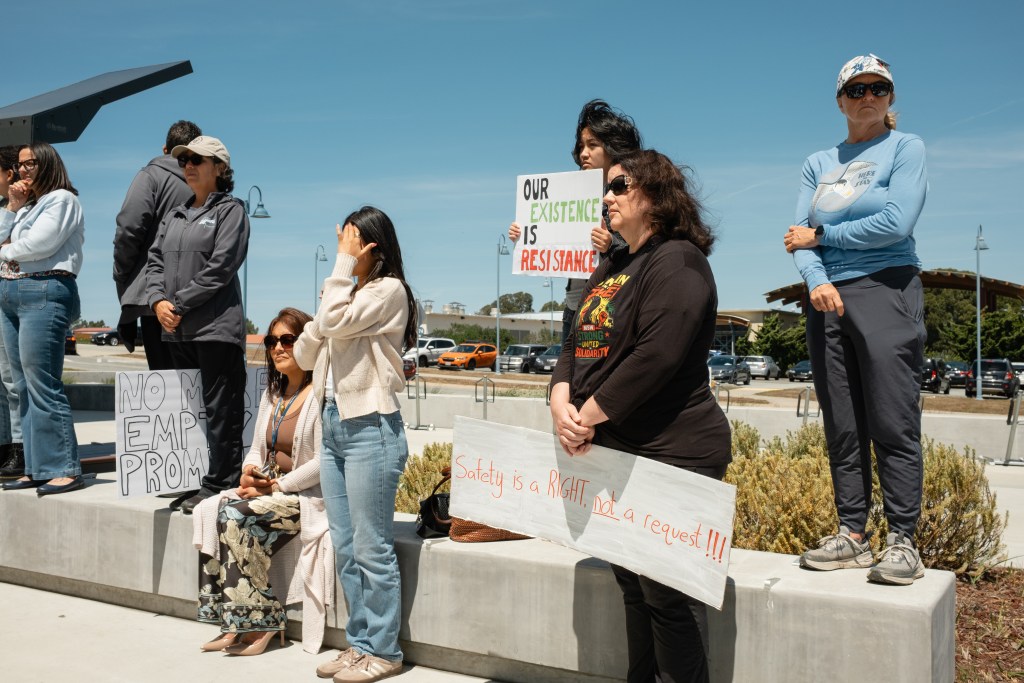
“I feel like [the issue] is very deep rooted. It’s very rude and it’s very real and that shows how people truly feel,” said Mister. “They’re doing an act that is very bold but still trying to be secretive behind it.”
Last October, the campus community was rocked by an incident in the Promontory dorms when the n-word was found graffiti’d outside multiple dorms. Since that incident in October, three other cases have been reported and addressed by the school, two instances of graffiti in the OSU, and one in Vineyard dorms.
In response, the BSU has released multiple statements of demand calling for change on the administrative and systemic level.
In response to demands by students and faculty for more clarity, the school has released multiple statements, each calling for an end to hate on campus emphasizing progress made on certain demands by the BSU.
Among their primary announcements have been the improvement of camera systems, in-person microaggression and Title IX/DHR training for campus community members and launching the media campaign “Hate Has No Place On Our Otter Raft.”
But administration has been criticized for failing to properly meet the needs of the moment. Initially released statements have been criticized for vague and unclear language regarding specific groups targeted.
“I feel like people in power when they’re trying to adjust a situation on a colloquial and a positive and a peaceful standpoint, and they’re able to, demean us and belittle us with that phrase and say this right there, that speaks a lot of words,” said Mister
The quality of investigation following each incident has also been called into question. One student, who wishes to remain anonymous, says that the school never contacted him after the n-word was written on his whiteboard in Promontory. His statement on anonymous Instagram account @csumbtea sparked the original statement by the BSU, but he himself was never contacted by police to investigate.
Coleman’s door was also tagged, in her case with a message engraved on her door in pencil, said that by the time the police contacted her to investigate, the school had already covered up the offending graffiti with paint, making investigation more difficult.
Moving Forward
CSUMB has grappled with systemic racism on its campus before. In 2020, following the unlawful killing of George Floyd both CSUMB’s academic senate and a collection of Black faculty members released statements calling for CSUMB to address issues of racism and enact systemic change on campus.
Of that letter’s 10 demands, many have been met including a physical space for the Center of Black Excellence now in Building 12, and the implementation of an Ethnic and Gender studies major.
But the biggest demand made by the statement, and the most important, is CSUMB “mov[ing] beyond merely recognizing systemic racism to investing in a strategic approach to dismantling racist policies and practices (unwritten policies).”
But this change is slow. Founder and co-advisor of the NAACP branch on campus Steven Goings has been at CSUMB for 16 years. He remembers in 2010 when “f— black people” was found written in front of the Otter Express, sparking student outrage. Without permanent change, as he was quick to point out, history has repeated itself.
“The most important thing that can come out of this rally is more people getting permanently involved, otherwise you will lose everything you gained here today,” said Goings.
The protest last Thursday suggests CSUMB is moving in the right direction, especially as administration moves forward with campus efforts to improve diversity, including a campus wide seminar on Monday, May 1.
But Mason is quick to remind us that progress is never permanent. “Don’t get hoodwinked, you have to stay vigilant and stay working. Keep up the fight, keep up the fight.”






Photos by Elliot Rowe