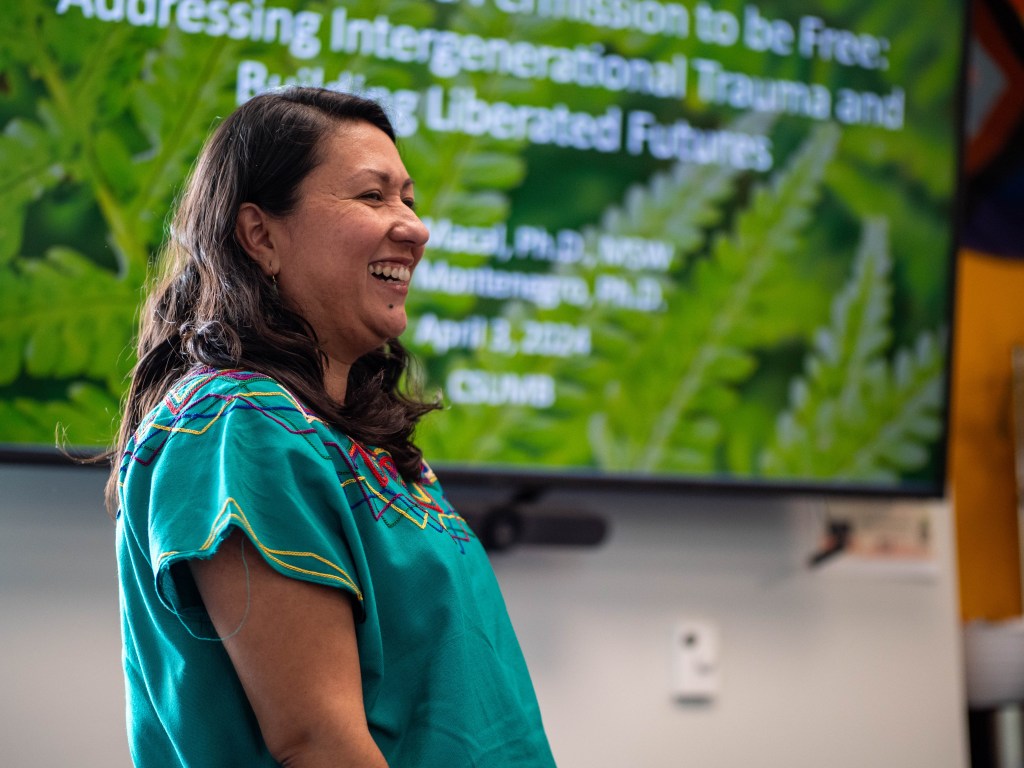
“I came here when I was 4 years old … I was undocumented and when I would ask about Guatamala, my family wouldn’t really want to talk about it because of the history, the genocide and the war.”
For Carla Macal, the legacy of colonialism in Guatemala transcended generations of her family with a trauma that was so often relegated to silence.
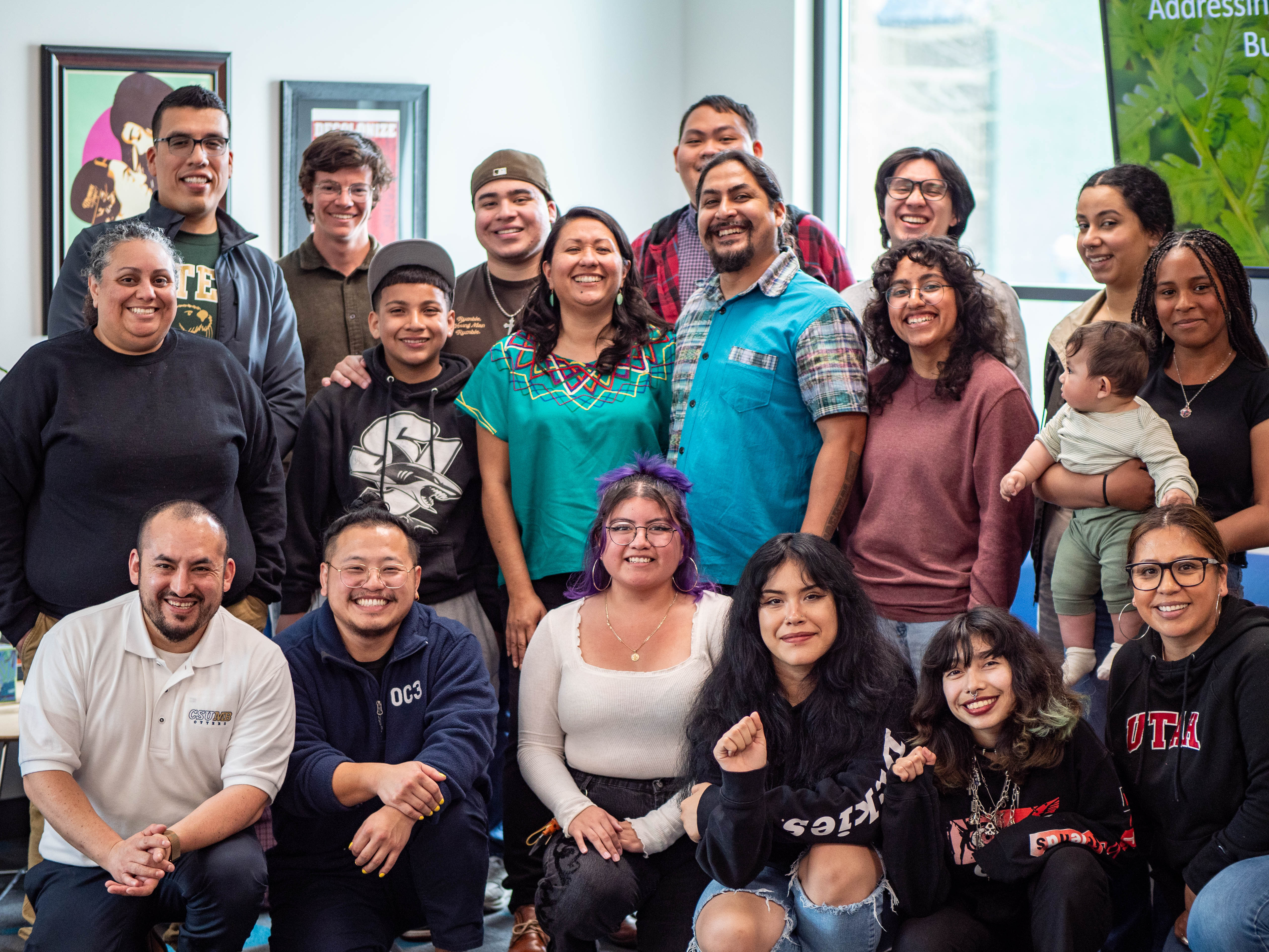
“How do we unpack some of these silences?” she asked around a dozen students gathered last Wednesday at Cal State Monterey Bay’s (CSUMB) Otter Cross Cultural Center (OC3).
In an attempt to elevate these conversations, CSUMB’s Men of Color Alliance welcomed Macal as well as Arón Montenegro to host a discussion titled, “We Don’t Need Permission to be Free: Addressing Intergenerational Trauma and Building Liberated Futures.”
Macal and Montenegro are both University of California postdoctoral fellows who have dedicated their research to the use of art in resisting the legacy of colonialism and building solidarity among oppressed peoples.
Despite the reality of intergenerational trauma, they noted that trauma is not the only thing passed down through colonized lineages. “We inherited trauma but we also inherited beautiful art,” said Macal.
Emphasizing the role that this cultural inheritance plays in preserving the traditions and identities of colonized peoples is the central focus of their work.
“Art comes in many different forms, it’s not just paintings in a museum … Everything is an art,” said Montenegro. “What we’re trying to do is allow people to find their creative outlet.”
Macal echoed this sentiment, saying that in the fight to preserve marginalized cultures and traditions, each person has unique skill sets and must find ways to “use these constructive skills in a way that can benefit your community.”
For Montenegro, head chef of People’s Cafe in El Monte, California, cooking is one way to use his skills for the benefit of the community. People’s Cafe reintroduces traditional indigenous foods to the local palate as a means of combating cultural assimilation and hunger in the area.
People’s Cafe also strives to build cross-border solidarity by selling “Zapatista Coffee,” produced by indigenous communities in Chiapas, Mexico. The proceeds from the coffee sales go directly back into the communities.
For Macal, connecting with one’s body is an artform essential to engaging with and healing intergenerational trauma. “A lot of scholars have argued that the body is very multifaceted and dynamic … so I think we can see ourselves also as art,” she said.
One way in which she has manifested this view of the body is through a passion for theater, something passed on to her from her family.
“In theater we have to use our body, to act and to become another role,” she explained.
Macal uses theatrical performance as a means of protest, in one instance performing a scene depicting sweatshop-labor in front of a Walmart to express disapproval of the company’s labor practices.
In addition to this, in 2016 Macal started Ixoq Arte, a business selling traditional health products as a way of embracing practices of indigenous herbalism.
While these projects are diverse and may at first glance appear unconnected, for Macal and Montenegro they are each a part of the broader goal of challenging the ingrained societal assumptions that many people have, whether about food, wellness or the definition of art itself.
According to Montenegro, the true value of art is that it “pushes us to think beyond certain confines … it’s an imagination of another world beyond what we’re facing today.”
Montenegro challenged the students in attendance to “rebuild our spiritual conception of the world” noting that “even our worldviews are colonized.”