
For years, Democratic students had no official place at Cal State Monterey Bay. When she transferred to the school last semester, Kasak Kaur decided that had to change.
Among the youngest and smallest schools in the CSU system, CSUMB isn’t exactly known as a hotbed of political activism. While groups like the Abolitionist and Decolonial Learning Collective have organized protests in the past, they lack a broader network or resources beyond the local community.
By reviving the long-defunct College Democrats club at CSUMB, Kaur and her colleagues now represent an organization with over 600 chapters nationwide, whose alumni include everyone from former U.S. Representative Nancy Pelosi to, purportedly, Monterey mayor and CSUMB graduate Tyller Williamson.
The move comes ahead of what polling predicts will be a very successful midterm election for Democrats nationwide. Yet with young adults continuing to vote at rates well below their elders, groups seeking to improve their turnout have their work cut out for them.
“I think it’s really important to have youth involved in politics,” said Kaur, a third-year humanities and communication major at CSUMB. “Especially now, just because I think if we don’t, like, start yapping now it’s going to be too late.”
As the Democratic party grapples with existential questions surrounding its future, the resurrected club’s efforts may be particularly timely. According to data from the Public Policy Institute of California, young adults in the state – women in particular – lean more Democratic than older generations. They also tend to favor progressive causes like Proposition 40, dubbed the “billionaire tax,” which their parents or grandparents may find less appealing.
“We looked at the stats of how the youth vote,” said Kaur. “And that was really heartbreaking, because candidates don’t take youth seriously because their voting rates are really low. So they never even come and approach us, and the youth is almost neglected…I think if you start voting, then you’re going to be more considered.”
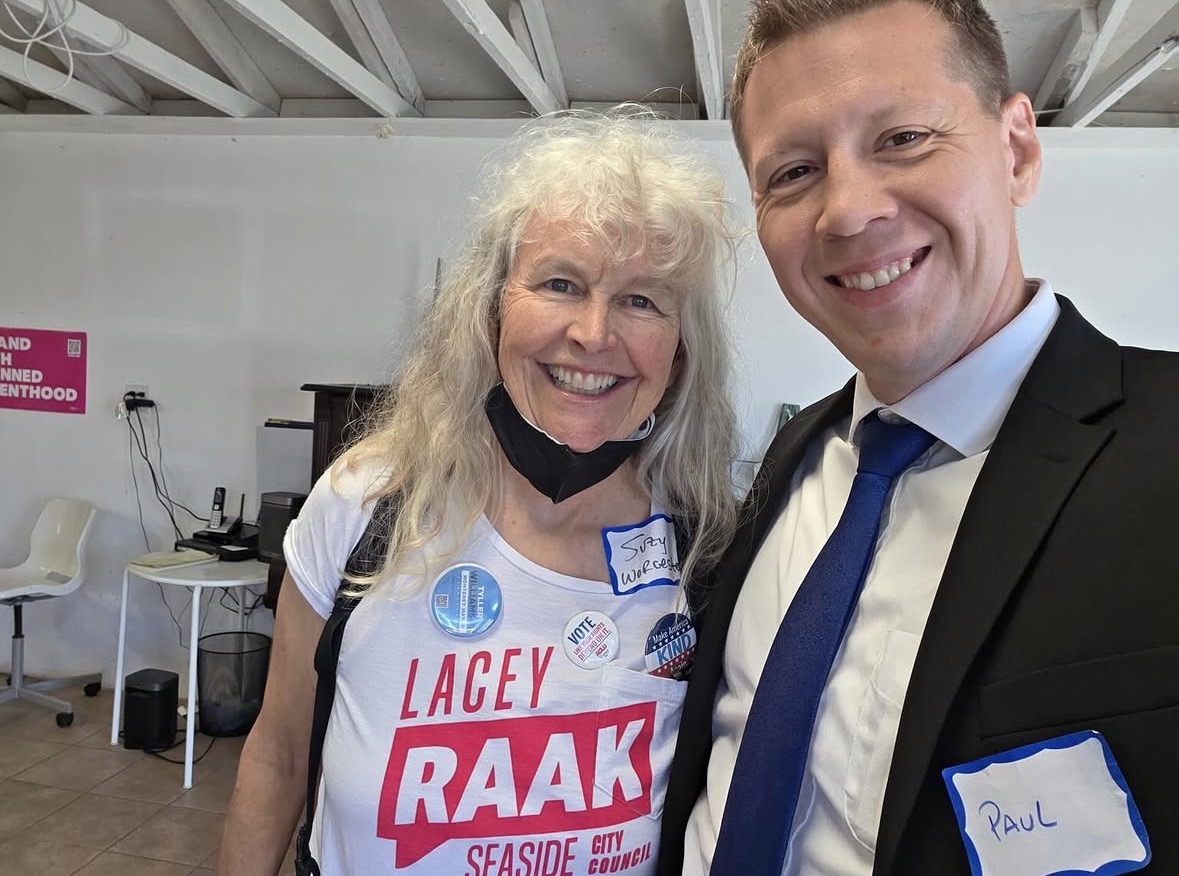
According to Paul Lee, treasurer of College Democrats, one of the biggest challenges to the club’s work has been pushback regarding the use of school funds. While College Democrats, like all groups recognized by the Inter-Club Council (ICC), is eligible to receive funding, Lee has been told those funds cannot go toward activities that are considered politically partisan.
While the Lutrinae was unable to independently confirm whether such a policy exists, the CSU policy governing student activities does state that “a campus’ recognition of a student organization…does not express or signify that the campus approves or endorses the organization’s goals, activities, or points of view, or that the campus supervises or otherwise controls the student organization or its activities. Nevertheless, and provided that a student organization meets and maintains campus requirements for recognition, campuses provide to student organizations certain benefits and privileges (e.g., use of designated on-campus facilities free of charge, funding opportunities, support for on-campus program planning, and information regarding basic event management and financial management practices).”
In spite of bureaucratic hurdles, the club’s leadership is optimistic about its future. While attendance at their biweekly meetings remains sparse, they’ve amassed around 80 Instagram followers and, according to Kaur, about 25 official members on MyRaft since launching at the start of the semester. Those successes have come from very minimal outreach efforts; once they’ve sorted things out with the ICC, they plan to redouble those efforts on campus and beyond.
“First and foremost, I would say vote. Register, vote. It’s not hard to do, and it’s very important,” said Lee “And then…I would say keep your eyes open. As a club, College Democrats, we’re gonna be coming in big. And it might take us a few months to get there. But keep your eyes open. We will have stands and we will be hoping that you join us.”