
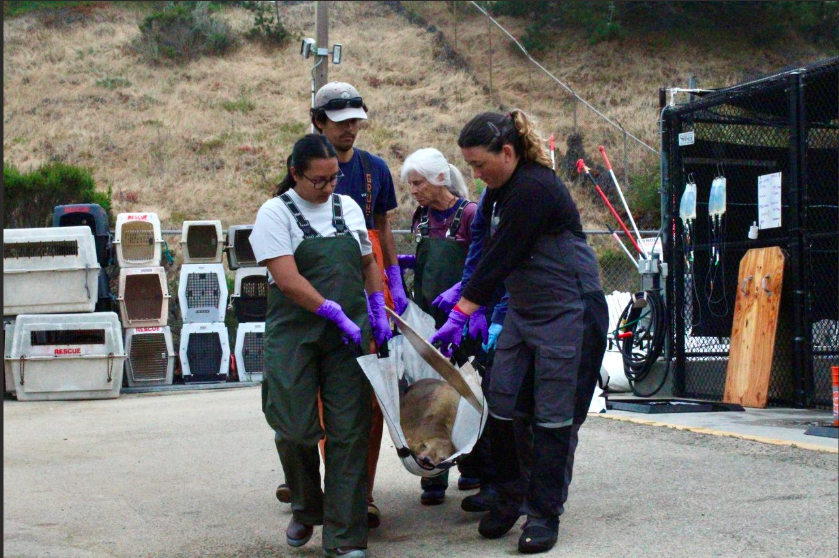
Monterey County is going through the fifth largest outbreak of domoic acid poisoning it has ever had, with 211 reported cases of affected marine mammals. California sea lions are the primary affected mammals who are washing up on shores and exhibiting erratic behaviors.
Domoic acid is a neurotoxin that attacks the brain and heart, causing seizures and heart failure in sea lions.
The Marine Mammal Center in Castroville serves as a rescue and rehabilitation center and has been taking in and treating affected wildlife during the current outbreak – which has been going on for the past three months.
“Our team here at The Marine Mammal Center has been responding to an unusually high number of California sea lions suffering from domoic acid toxicosis (poisoning), with 188 rescued since the beginning of the year,” said Giancarlo Rulli, spokesperson for the Marine Mammal Center. “A majority of those rescues have occurred since July 1. In the past two weeks, the number of responses has started to go down but it’s unclear when things will completely subside.”
Domoic acid comes from algae blooms that are naturally occurring, when they bloom small fish such as sardines and anchovies will eat it. Then marine mammals will come in and could consume up to 40 pounds of fish a day. That abundant consumption of the contaminated fish lead to marine mammals falling ill.
This poisoning causes neurological damage and symptoms of this damage are commonplace in California sea lions. They can be seen on coast lines exhibiting unusual head bobbing and weaving, twitching, disorientation and aggressive behaviors.
Bystanders are asked to follow certain steps when spotting an affected animal. For starters, keep at least 150 feet between you and the animal, do not attempt to touch, move or return the animal to the water. It is important to note your exact location and physical traits of the animal, such as size and fur color. Then call the Marine Mammal Center at 415-289-SEAL (7325).
“The response to the outbreak placed significant demands on our mostly volunteer response teams. Our hotline was receiving anywhere from 300 to more than 600 calls per day a few weeks back, now between 150-300 calls which is still much higher than normal,” said Rulli. “Responding to a single neurologic sea lion can require a team of four to six trained responders… These animals can be physically difficult and unpredictable to handle.”
The treatment of these animals is monitored at the triage center of the Marine Mammal Center. Technicians flood the affected animals with IV fluids or give anti-seizure medications. However, their condition may be too far along for help as they die in transport or must be euthanized.
Outbreaks of this neurotoxin had previously been relatively seasonal. Blooms of the algae would occur during cold-water years because of strong winds bringing in nutrient-rich waters. However, the algae named Pseudo-nitzschia that carries the toxin has now been seen growing in warm and cold environments causing the flare-ups to become unpredictable.
Rulli said, “As the world’s largest marine mammal hospital, our scientists are working with oceanographers, algal-toxin monitoring experts and climate scientists to better understand how changing ocean conditions and other environmental fa
ctors may be influencing these events.”