
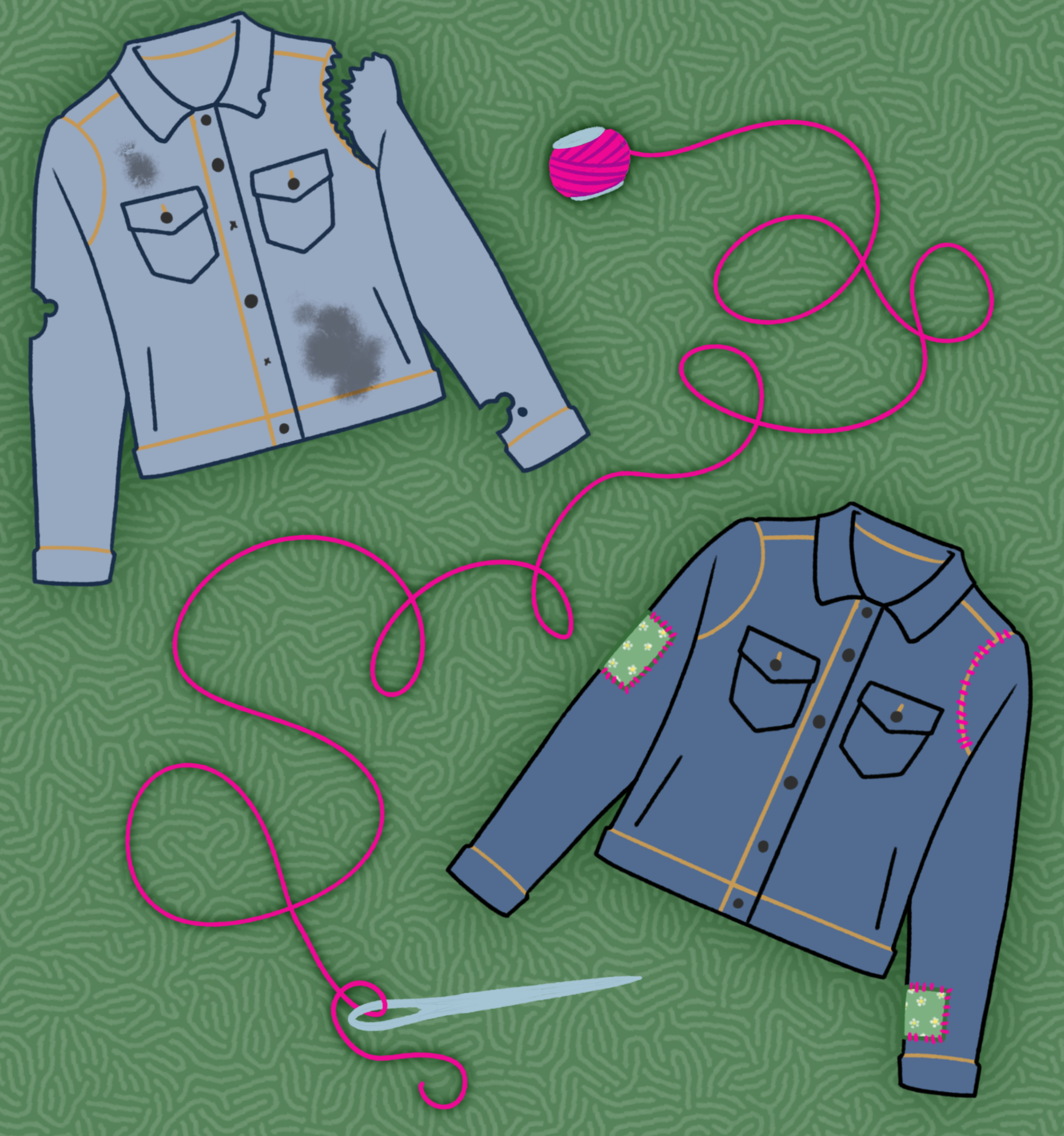
Buying new clothes and getting rid of unused ones is a never-ending cycle that generates an abundance of waste. To cut back on waste and give us a break from internet fashion trends that tempt us to buy the newest thing, let’s consider upcycling.
The art of upcycling is a creative way to reinvent articles of clothing that are either on their last leg or that you do not wear anymore. Whether it’s because of an unfortunate stain or an odd fit, upcycling can turn old clothes into new pieces or accessories through visible mending, resizing and reconstructing.
Reinventing old pieces gives the creator a sense of personal style that can not be replicated. Fast fashion is a personalityless cycle that grabs people through fast moving trends that companies follow and mass produce for profit. However, upcycling is a creative, intentional task overflowing with a variety of avenues that can be taken.
Visible mending is when stresses or damage on the clothes, such as rips, are mended with solutions intended to stand out. Patches are a great option for a visible mend, which can be bought pre-made or created with excess fabrics. Another option for visible mending is embroidery, which can cover stains or undesirable patterns on a piece of clothing.
Another method on the less creative side, but in my opinion is important when it comes to upcycling, is resizing. I have had many pieces of clothing in my life that I have gotten rid of because I just did not enjoy the fit, so hemming some jeans or taking in a bust can completely reanimate a piece of clothing.
Reconstructing clothes is a personal favorite because a lot of people underestimate what you can do with just a pair of scissors and a dream. This can consist of redesigning a top, going from a T-shirt to a backless tank top or just widening a neck line. Now, this can also create a new accessory instead of creating a piece of clothing. You can create a headband or a wallet with the fabric of unwanted clothes.
Along with these options, I recommend checking out @paola on YouTube for clear visual examples.
Materials can range depending on the vision, if you are just starting out and need more fabric to create with I recommend going to a fabric store or thrifting. Shop from your closet first and foremost, but going to Michaels and spending $2.99 on a yard of fabric or buying scrap pieces from a thrift store will be more cost effective and sustainable.
Having said that, if you want to check thrift stores for pieces to strip fabrics from, make sure to check out the OtterCare Hub’s free thrift corner open for all students to take home clothes donated by previous students. Additionally, the school has the Makerspace available to students, if you are even in need of specific sewing materials or assistance for any future projects.
It is important to create something that you will continue to wear because of the dedication and personality put into it rather than the mass produced trends that are shoved down our throats everyday on the internet. Give yourself a break and exercise your creativity on something for yourself with upcycling.