
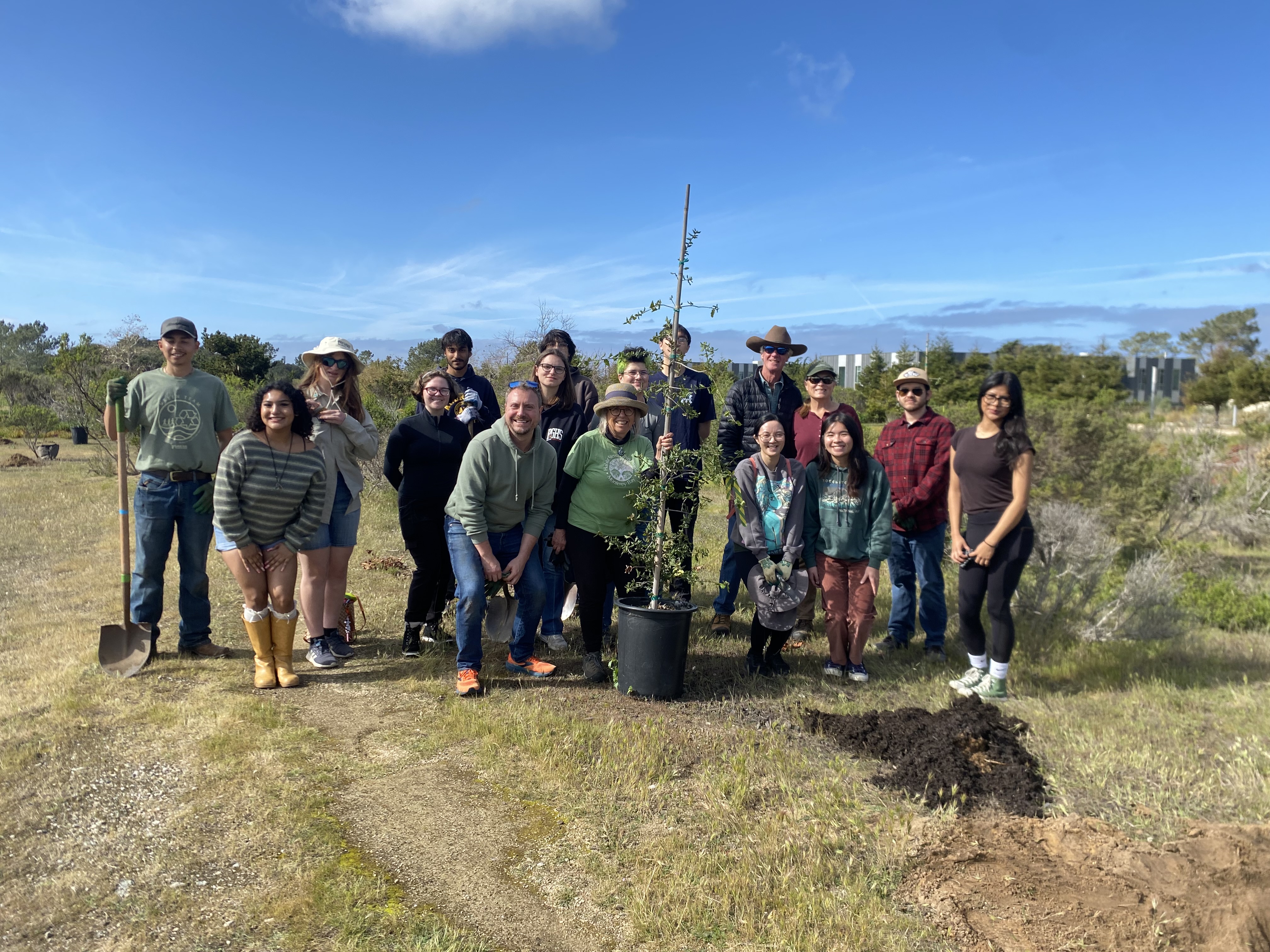
The Habitat Stewardship Project (HSP) collaborated with Cal State Monterey Bay’s risk, safety, and sustainability center to plant 30 trees with students and staff on Friday, contributing to the campus’s sustainability goal of having 2,030 trees planted by 2030.
The 20 combined students and faculty members planted coastal oak trees, native to Monterey County, behind the campus library. Event organizers aimed to give attendees the opportunity to learn the importance of native species in habitats and actively contribute to the campus’s ecosystem.
Student worker at the Stewardship Project Noah Martinez said the goal of the event was,“Getting the community involved outdoors, in nature, whether that’s educating them on how the ecosystems work or just getting them interested in going outside and enjoying the sunlight.”
“Habitat restoration is also an important part of it, the native habitats provide a lot of food [and] shelter for a lot of the different species, whether it is mammals, insects, birds, it is a really intricate system that we are trying to restore in the Monterey area.”
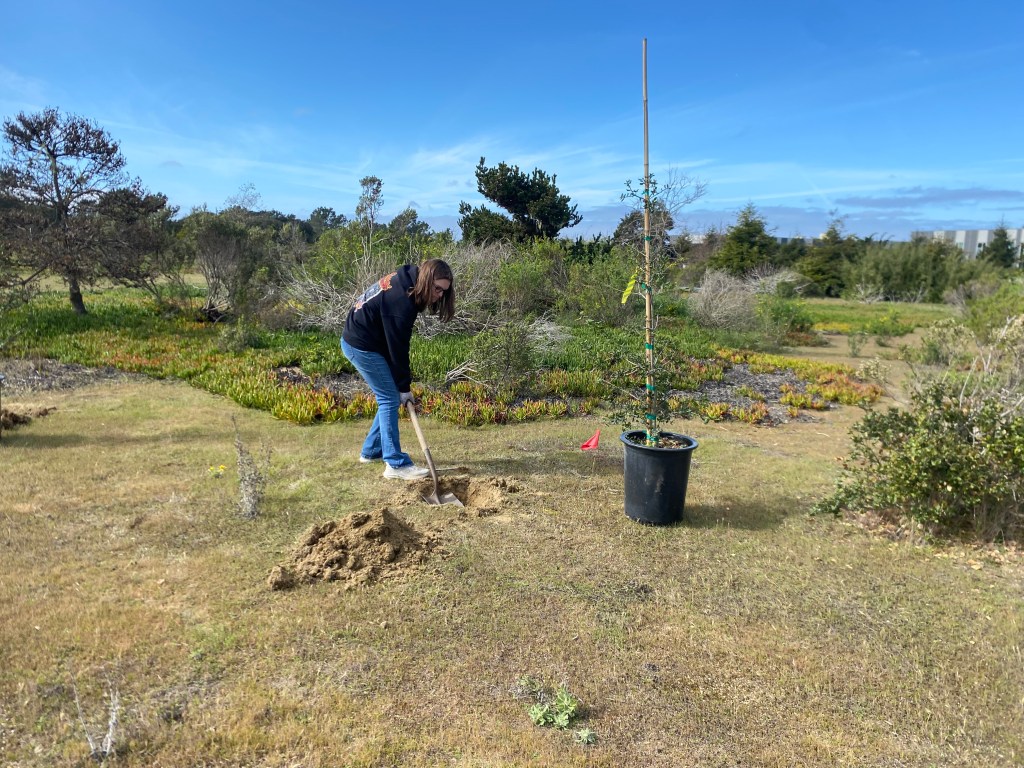
Equipment to plant the trees were distributed at the sign-in desk when participants arrived. They were set up right behind the Tanimura & Antle Family Memorial Library and 30 potted trees were distributed across the fields. Next to each potted tree were flags, designating where the hole would be dug for the planting process.
Once gloves and shovels were in everyone’s hands, Project Director Laura Lee Link introduced the event through a group huddle. She, along with Derek Martin, the associate director of the Safety, Risk, and Sustainability Office, explained the importance of the trees and how they were brought to our campus.
“Student fees brought these trees to campus, everyone is contributing to this project. With this event we will be on track to our goal with 935 trees planted so far, but by the end of February there will be 955, on the 27 we are planting 20 more trees, next to the police station,” said Martin.
Before the digging began, they also set aside time to read out a land acknowledgement to recognize the Indigenous lands campus resides on.
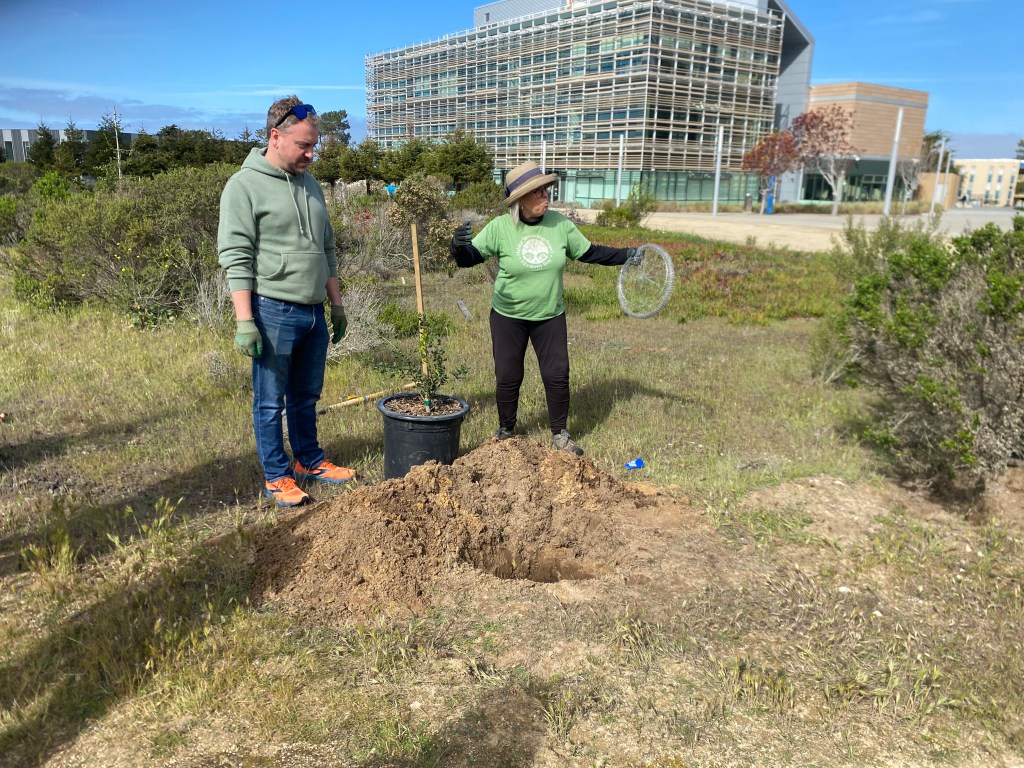
Students and faculty then gathered around Link and Martin as they gave a step-by-step demonstration on how to plant the trees. Starting with making sure the holes were wide and deep enough for the plants. With the plants out of their pots, the next step was to cover the roots with a gopher net to protect the roots from getting eaten by mammals in the area. Once the trees were netted, they were placed into the hole and covered with the native soil, to make sure the plants were properly prepared to grow in the area.
Attendees were put in pairings or groups of three for each tree, taking turns digging and transferring the trees to the ground.
“As a marine science major it is really important for me to bring back native species, even if it is not marine native species, it is really fun and makes me feel good,” said Venura Entova, a first-year marine science major. “I want to take care of the beautiful places on campus.”
Each person had the opportunity to plant at least one tree within the two hour time-period. in between taking breaks, stopping for water or grabbing a snack provided by organizers. With the dedicated work, all 30 trees were planted before the last person left the event.
“I think it is cool that the school invests in planting native plants and have their students partake in it,” said Jennifer Aguirre-Franco, a third year psychology major. “It kind of makes you feel like you left your footprint on the school, a little hand print right here.”

Photos by Hailey McConnell