
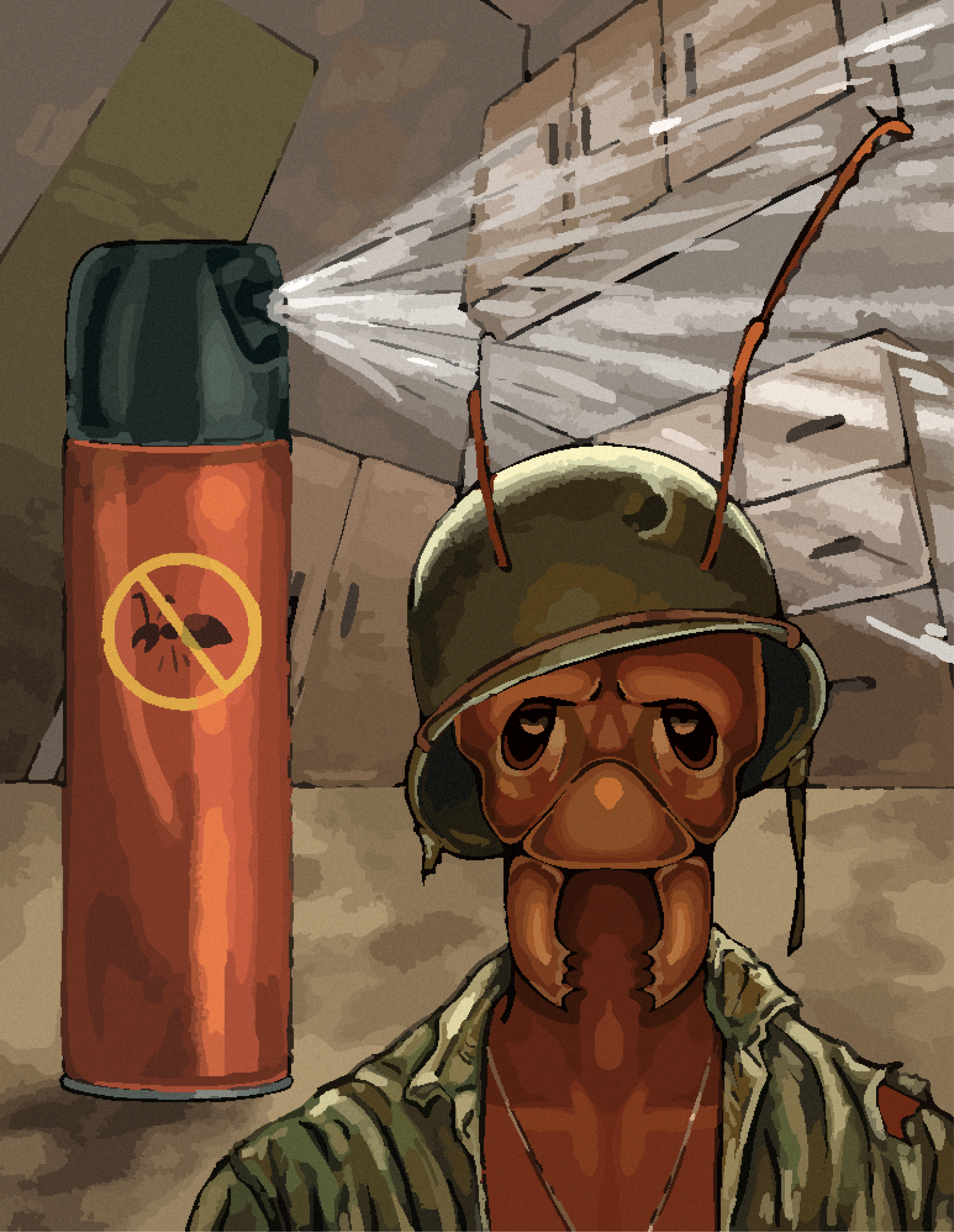
Ant infestations are a reoccurring problem for CSUMB students, but recent television coverage of the problem by KSBW has renewed attention on an issue that exists across campus and across California.
“My friend who has an ant problem as well brought the term ‘World War A,’” said resident advisor David Santizo.
The name is even truer than he may think.
Cinematic arts and technology student Cameron Shull was inspired by his own ant problem to produce a photo essay documenting the issue. He identifies the main ant causing the problem as Argentine ants, a widespread and invasive agricultural pest known for their difficulty to control and remove.
According to the UC Riverside Center for Invasive Species Research, Argentine Ants are a “globally distributed invasive pest,” which arrived in California in 1907 and have spread across the West Coast since.
Santizo is one of many who has dealt with an ant infestation, including many of his residents in Asilomar Hall. But Santizo says the problem is campus wide.
“It’s not just my floor; it’s a lot of floors on campus. Everyone is going through an ant problem,” said Santizo
“I took it into my own hands and did like three rounds of Raid spray in my entire dorm and bathroom,” said Santizo, “I left my dorm for hours and didn’t come back until the night, to this day they’re gone.”
In Santizo’s experience, ants are a reoccurring problem, coming back every season when the weather warms and students enter the dorms. “They come out when the students move-in, right before winter they dip, and then they come back in the spring.”
For some East Campus students, the problem was severe enough to justify exterminators sent in by housing management platform Greystar.
For some that was enough, but for others the solution was only a temporary one. Within two weeks they were back.
For students facing an ant problem, the advice remains consistent and traditional. The UC Riverside Center for Invasive Species recommends “sanitation (e.g. removal of food scraps), closing points of entry to homes and removing landscaping features that promote favorable microclimates – especially excess water sources.”