

By Tom Nolan
As anyone who’s participated in a particularly vicious Monopoly game can tell you, board games have the ability to tear friendships apart. However, one club on campus demonstrates that they can also create valuable connections between increasingly isolated young people.
In the words of Board Game Club president Kiwi Cervantes, the club aims to “just create a welcoming environment for anybody who wants to come and play board games…I would say [we’re] very close to each other, but still always open to new people.”
Each week, Cervantes brings their own eclectic personal collection, which includes everything from ordinary playing cards to “Zombie Kittens.”
“The president honestly just has the most board games,” they said, laughing. “All the officers, we’re all involved in the club an equal amount, and just make sure the events run smoothly.”
Some board games might challenge us mentally, while others have a greater emphasis on humor or social interaction. Many feature a combination of all three. Cervantes’s personal favorite game, Blood on the Clocktower, is based around social deduction. “The Clocktower gives us all an opportunity to work as a team while still being against each other in some ways,” they said, “and it also gives everyone a chance to shine in their own way.”
The Board Game Club is set apart by its ability to break down barriers between young people who have reportedly felt more isolated in the post-pandemic world. Few may be surprised to learn that evidence points to a significant increase in American adults experiencing, or at least speaking out about, feelings of loneliness after the onset of the pandemic.
A study published by the National Academies Press found that just under 50% of adults reported such feelings before the coronavirus, while numbers surged as high as 66% afterward. Young adults appear particularly vulnerable at a whopping 75%. In working to address these worrying trends, the study recommends a strategy of “promot[ing] social connectedness”, naming “community events” as one example.
Board Game Club meetings, held Wednesdays and Thursdays from 4 to 8 p.m., serve as an example of the potential these community events hold. At one such meeting, newcomers might sit at a table surrounded by strangers, and within just a few minutes find themselves laughing, cursing and egging on their fellow players. A little competitive spirit and a shared love for games can make for fast friends among the modest pool of weekly participants at meetings where attendance averages around 10-15 people.
Aside from regular meetings, Cervantes is working to bring the club more recognition with some big plans on the horizon. “We tend to keep things fully transparent with the events that we have going on,” they said. “We’re working on an event that hasn’t been fully announced yet, that will be going on next semester for everybody to enjoy. I can say that it is going to be a large-scale university event, put on by our club but in collaboration with Associated Students.
“The best way to start getting to know each other is to put [ourselves] out there. Even if it means attending one meeting or playing a board game with one other person…there’s always opportunities to get involved, whether it is as an officer, whether it is you bringing your own board games and teaching people how to play. There’s many opportunities that we have for you to feel welcome.”
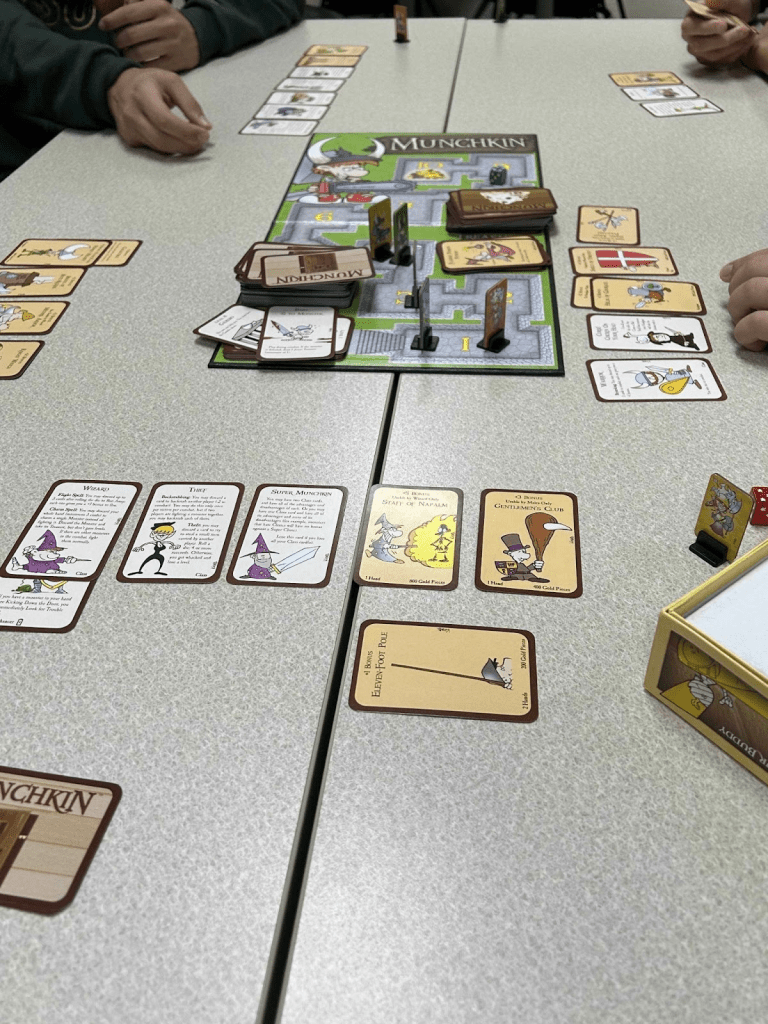
Photos courtesy of Board Game Club