
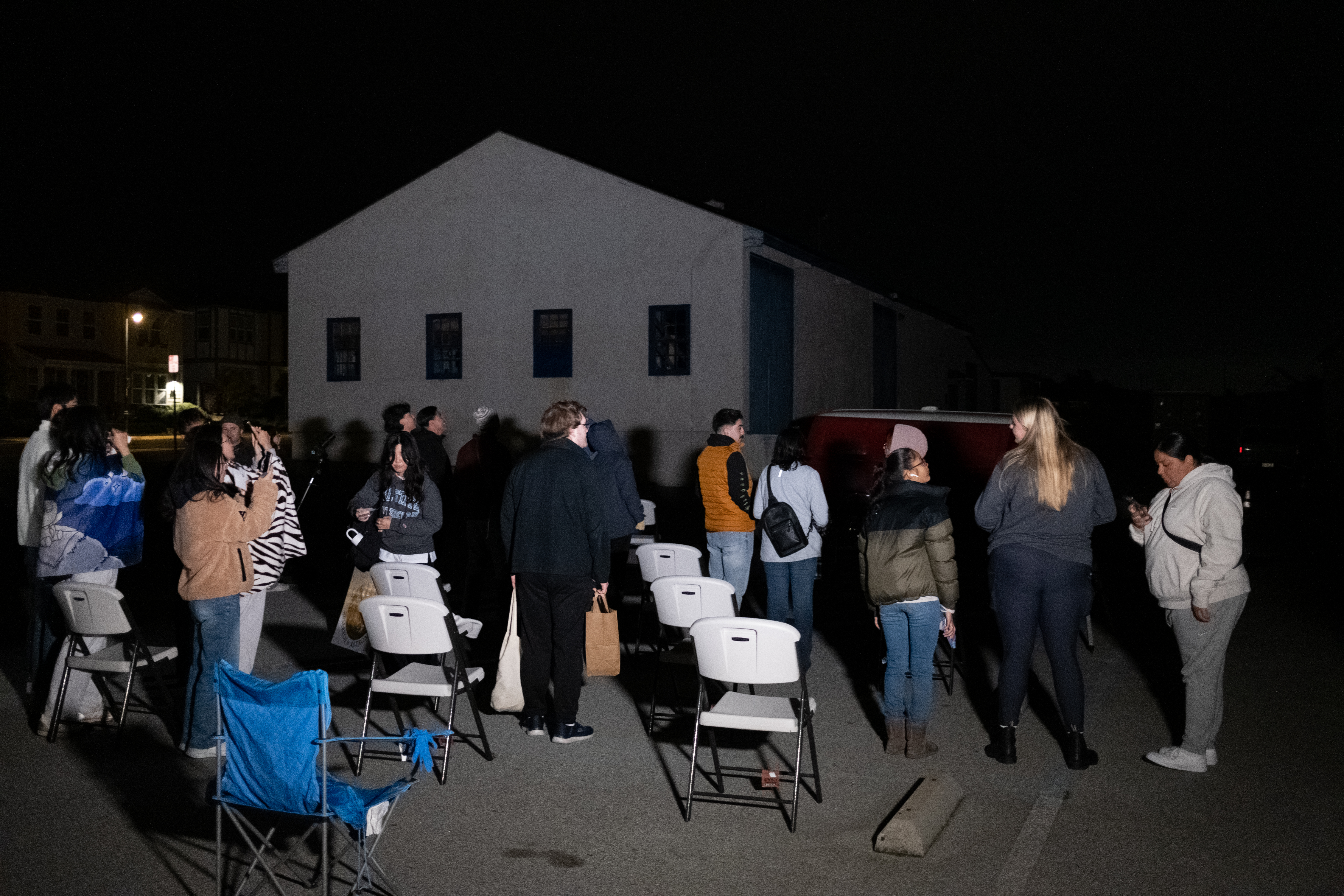
Students at Cal State University Monterey Bay (CSUMB) had the opportunity to view the total lunar eclipse with space and equipment provided by the Monterey Institute for Research in Astronomy (MIRA).
While the event started at 10 p.m., the total lunar eclipse occurred that night from 11:26 p.m. to 12:31 a.m., giving students time to mingle prior to the eclipse. Hosted in part by the MeteOtters Stargazing Club, 30 attendees took part in the late night activity, as well as several of the MIRA staff members who helped students understand the significance of the eclipse.
For fourth-year Hyunju Ha, it was her “first time getting to see a lunar eclipse.” Ha and other members of the Stargazing club such as fourth-year Sohyung Park, were there to “spend time with [their] club.”
Although the eclipse could be viewed anywhere and there was “no best way to view it,” as put by Mark Tomalonis of MIRA Astronomy Club, a unique experience was offered at the event.
During the event, students were allowed a short tour of the Weaver Student Observatory and the workshop MIRA has, the station just northwest of the CSUMB campus. The two-story observatory is home to a 36-centimeter Schmidt-Cassegrain computer-controlled telescope, which attendees got to see in person.
“This MIRA campus is used for testing and augmenting mostly,” started Astronomer Daniel Cotton. “It’s a good place to make sure everything is just right before we have to trek it 90 minutes away.”
90 minutes away is their Bernard M. Oliver Observing Station, which houses a 91-centimeter telescope, much larger than the one housed northwest of CSUMB. The station is located on Chews Ridge and is mostly for professional use when the Weaver Student Observatory can’t suit the requirements for any given task.
As the event continued the marine layer came in, lowered visibility, and quickly caused the event to become social rather than observational. Mingling with the astronomers, some of the attendees learned about why a total lunar eclipse was unique.
“During a lunar eclipse, there are two shadows the earth casts, the penumbra and umbra. The umbra is the darkest part of the shadow and we only have a total lunar eclipse when it covers the moon completely,” explained Cotton.
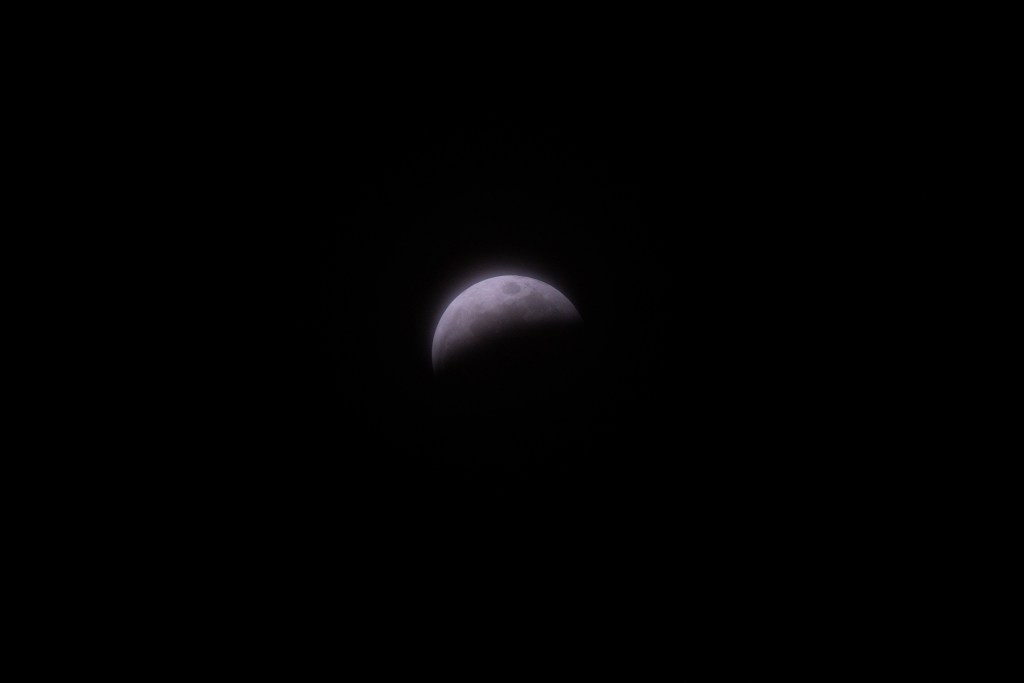
Light passes through Earth’s atmosphere and can cause the color we see during a lunar eclipse. A total lunar eclipse causes a special red hue that occurs during the umbral coverage. While visibility was high during the partial eclipse, the total umbral coverage wasn’t visible due to clouds.
Just before midnight, rain started to come down and caused the outdoor event to end early.