
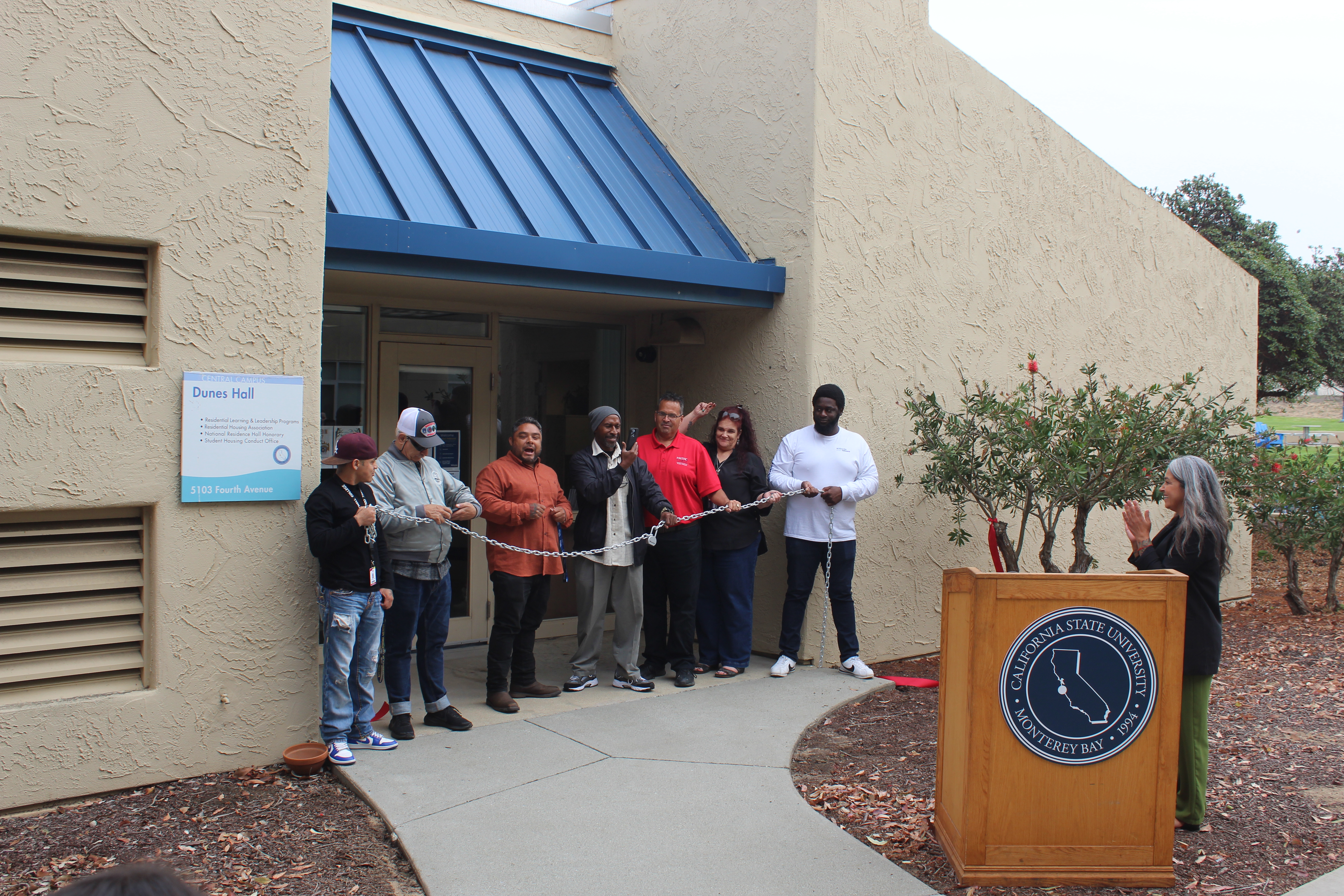
The red ribbon was cut on Oct. 9 for Project Rebound’s grand opening in Dunes Hall, following speeches by Cal State Monterey Bay (CSUMB) president Vanya Quinones, Vice President for Enrollment Management and Student Affairs Ben Corpus, Project Rebound Director Valarie Maestas and Coordinator Patterson Emesibe.
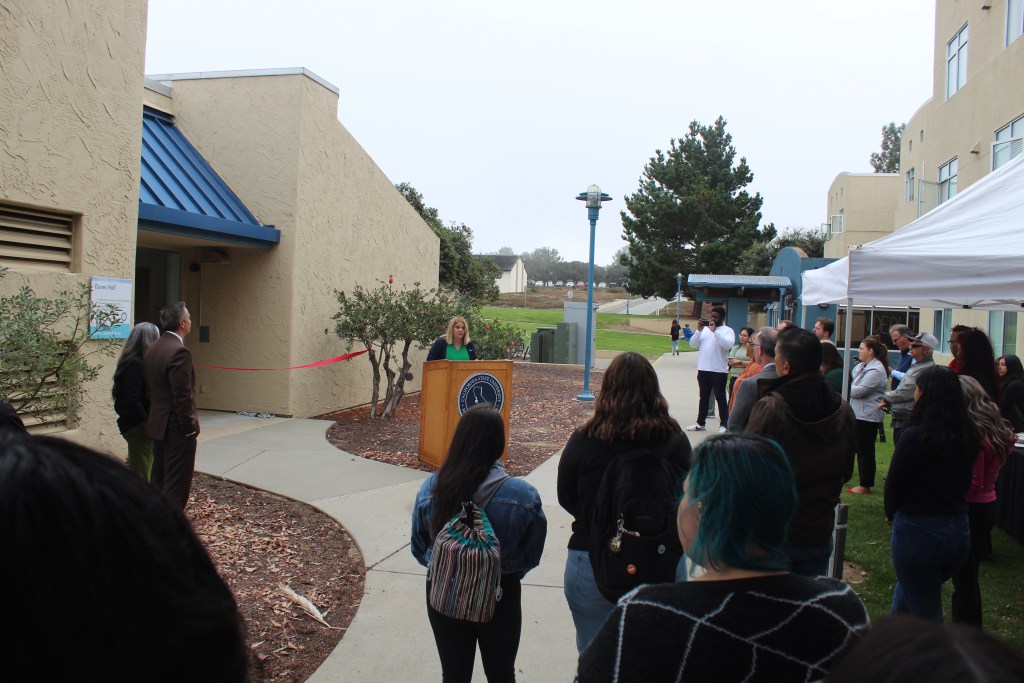
Maestas recognized several individuals critical to the success of the opening, including university administration members, the facilities department and the staff of Project Rebound. Special recognition was given to professor Sam Robinson, who left the college in 2023, and whose “advocacy and action allowed CSUMB to bring Project Rebound here.”
Emesibe emphasized the sense of community already forming around Project Rebound, encouraging attendees to turn to their neighbors and promise “I’m gonna tell someone about Project Rebound.”
Project Rebound is CSUMB’s latest campus organization, aiming to support formerly incarcerated individuals to gain access to higher education. Corpus emphasized the successes of Project Rebound, citing a recidivism rate of 1% for Project Rebound scholars compared to a “system-wide average of 46%.”
Maestas pointed out that the grand opening represented not just the collective effort by CSUMB but also the work of abolitionists and anti-prison activists over many years. “Today we have joined a movement with 18 other CSUs that puts individuals first,” said Maestas. “This is the result of the activism of thousands.”
A more symbolic moment came during the second ceremony — the unlocking of a steel chain across the doors. Formerly incarcerated members of the community were invited to hold the chain as it was unlocked, in a ceremony that Maestas said “reflects the journeys of those that we serve.”
Inside Dunes Hall, the space is already taking shape: a pinboard on the wall is already packed tight with posters, a common area is filled with rugs, couches and shelves adorned with books and artwork. In the back, a mural depicts the name “Project Rebound” surrounded by fluttering white birds.
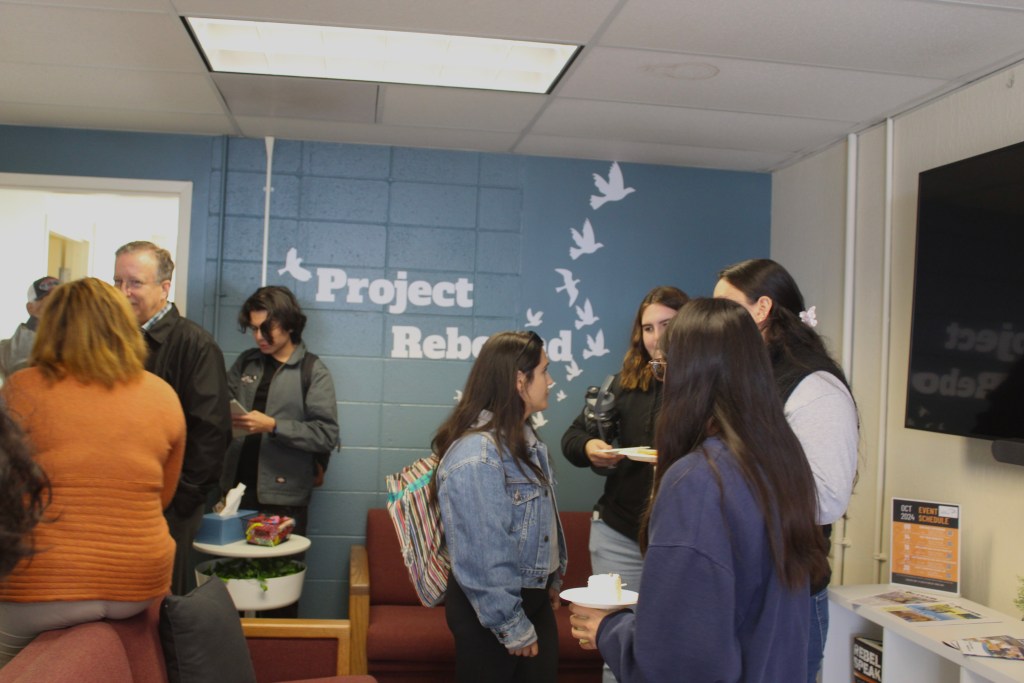
According to student coordinator Juan Barkley, Project Rebound aims to make their new headquarters “a safe place for people who have been formerly incarcerated to come and just release.” Barkley emphasized that they welcome everyone. “If we don’t have people to spread the word, we can’t help,” he said.
Lee DeHaven, a formerly incarcerated individual, wants to continue the teaching work he began in prison. DeHaven, who went to prison in 1980, recalls the limited resources students had — just pencils and paper. Now, 44 years later, he’s pursuing a Master of Science in Instructional Sciences and Technology to bridge the gap in his knowledge of technological integration.
“I’m very good at teaching,” DeHaven said. “I spent 30 years working in the classroom inside the prison as a student teacher, so I have the teaching experience. I just needed the technology integration.”
Corpus hopes that students like DeHaven will bring a much-needed perspective to campus. “Students from across campus will learn what life is really about from Project Rebound students,” Corpus said.
For DeHaven, Project Rebound has been a source of stability and calm in a hectic and often intimidating modern world. Even before their office officially opened, Project Rebound helped him navigate CSUMB’s admissions process and complete the necessary forms.
“Project Rebound is the safety net,” DeHaven said.