

Yefrey Mata was a juvenile when he had his first run-in with the law. But it was while he was incarcerated that he made up his mind that he wanted to pursue a higher education.
Today Mata is a third-year transfer at Cal State Monterey Bay (CSUMB). His success, he says, will continue to be aided by Project Rebound, the consortium of programs funded by the state that helps formerly incarcerated students gain access to higher education. This year, Mata is a student coordinator for Project Rebound at CSUMB.
The new program provides various avenues of support for their students, including a safe place to study and hang out, financial aid and benefits and leadership development to prepare them for their future careers.
“It can be difficult to be vulnerable and reach out for help,” said Mata. “I encourage you to own your identity and embrace opportunities that will come your way.”
Mata found it frustrating that when he first enrolled in Monterey Peninsula College after exiting the criminal justice system, he felt there was no support due to a lack of resources. He said it was this lack of support that eventually led him back into the criminal justice system.
After he was released from county jail, he found Cabrillo College in Aptos and their support for formerly incarcerated students before eventually transferring to CSUMB.
At Cabrillo, and now at CSUMB, Mata says he has excelled not only in his courses but his involvement in all sorts of programs. He became the president of the Rising Scholars Program and the vice president of the Central American United Students Association at Cabrillo. Through his involvement in these programs and his mission to provide access to higher education for incarcerated people, he met the Executive Director of Project Rebound Jason Bell.
CSUMB’s Project Rebound and its mission to provide higher education access to formerly incarcerated people is off to a strong start, says Mata.
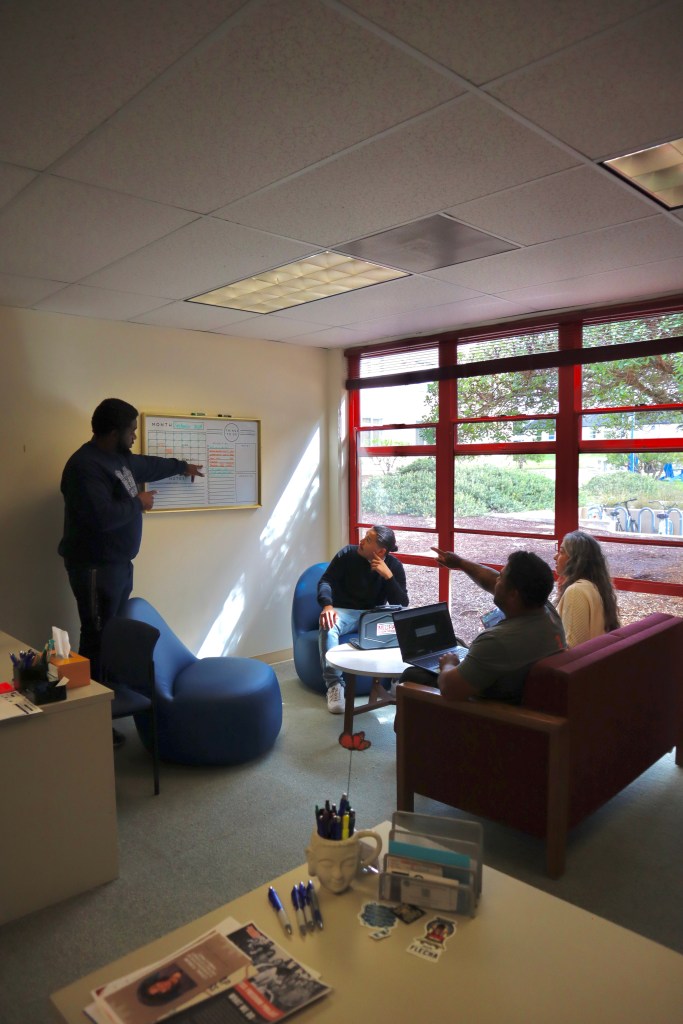
The program is hard at work getting its students involved through events. They’re hosting various events in October to allow the students to foster networks and get more involved with the campus. One of their upcoming events is a Proposition 47 event raising awareness about the opportunities to reclassify certain non-violent felonies to misdemeanors and this will be taking place on Oct. 16.
Project Rebound does more than just on-campus work. They also work with current people in prison to help them apply and transition into CSUMB. This allows those who started their education on the inside to transition smoothly to campus and continue pursuing their education, giving them an alternative to what the norm may be. This provides a direct pathway from incarceration to CSUMB.
Project Rebound was started in 1967 by John Irwin at CSU San Francisco, who was previously incarcerated. The program’s vision is a just and equitable opportunity for all to gain access to higher education, including those with an incarceration experience. The program is currently on 19 different CSU campuses, including CSU San Francisco, Sacramento and San Luis Obispo.
CSUMB’s Project Rebound is run by director Valarie Maestas, coordinator Patterson Emesibe and two student coordinators, Mata and Juan Barkley. Each coordinator has had a personal experience with the criminal legal system that has influenced their involvement.
The coordinators are driven by the individuals part of the program and what their journey to accessing higher education has been like. “Their stories and journey are important in highlighting Project Rebound,” said Maestas.
The journey is a difficult one. The program aims to support students from the application process to beyond graduation. “When they get to CSUMB, we provide extra support. We want to address certain barriers they may hit,” said Emesibe.
Maestas and Emesibe were both clear they wanted the student coordinators to be the drivers in this program. Project Rebound is meant to give a voice to students impacted by the criminal legal system. They want to host events not only for formerly incarcerated students but for all students.
Project Rebound wants to emphasize there is a different path for incarcerated students and that support is out there for them.
Barkley and Mata have been vocal about their plans for Project Rebound and the impact they want to leave on the program here at CSUMB. As this is the first year the program has been on campus, the two student coordinators are wasting no time getting the program out there.
One thing they highlight is the importance of authenticity. In Barkley’s opinion, “We can’t fail if we are our genuine selves.”