
War… what is it good for?
Audiences get an opportunity to think about that question while watching the new A24 film, “Civil War.” The film takes place in a future dystopian America, and shows the cruelties of war through the lens of a war-photographer/journalist. These journalists are on a journey to Washington D.C., with the intent to document an invasion of the White House.
On their way to D.C., they encounter several unsettling and frightening people/happenings. Whether it was a group of guys with guns outside of a gas station, or a town where everything seemed peaceful and untouched by war, there was a general feeling of tension wherever the film took its viewers.
Throughout the film there are depictions of cruelty and violence, along with short moments of joy among colleagues. “Civil War” explores the idea of survival in very hostile environments, all while trying to document the horrors entailed in war. This film also sheds light on the important role of journalism (especially during times of conflict or violence).
In promoting the film, A24 created a map of the United States that was divided by the different sides of war. The “Loyalist States” resided by the East Coast, while the “Western Forces” and “Florida Alliance” took up the top left and bottom right corners of the U.S. Additionally, California and Texas were depicted as their own republics, reflecting the real power that each state holds today.
Notably, the film was very objective. Instead of taking one side, director Alex Garland only showed the realities of what could happen in a civil war. This was a great decision considering journalism is intended to be objective.
Garland has directed other films such as “Ex Machina” and “Men.” Both are films that reflect the general fears and concerns of the public at the time. Considering “Civil War” was released during an election year, it is fair to say that this film reflects the concerns of our society. Beyond the U.S., this film adds to conversations surrounding the current war in the Middle East.
The two stars of the film were Kristen Dunst and Cailee Spaeny. Dunst plays an experienced war journalist who takes Spaeny’s character under her wing; Spaeny plays an eager up-and-coming journalist with high hopes and little experience.
People may know Dunst from her roles in popular films such as “Spider-Man,” “Jumanji” and “Interview with the Vampire” (among many others). On the other hand, Spaeny has recently gained notoriety playing the role of Priscilla Presley in the film “Priscilla.”
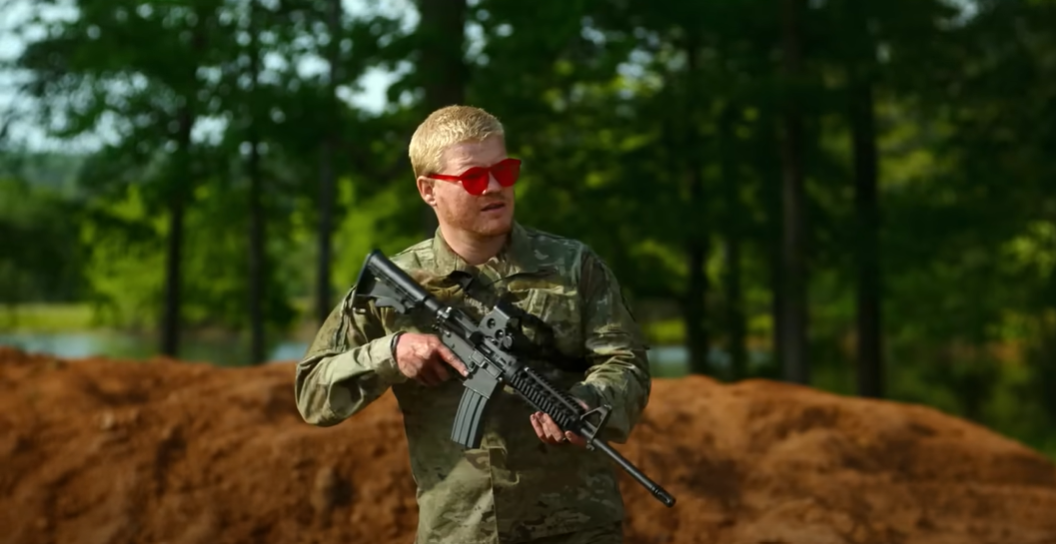
While the film focused primarily on the two female journalists, there were several others who helped drive the plot. That includes Wagner Moura (from “Narcos”), Stephen McKinley Henderson (seen in “Dune” parts one and two), and Jesse Plemons (“Killers of the Flower Moon”). Moura and Henderson play fellow journalists, while Plemons acts as an antagonist at one of the most stressful moments in the film.
Movie-goers seem to be split by this film. Looking at Google for audience reviews – 1,146 reviews to be exact – there are many one-star ratings and many five-star ratings, averaging 2.8 stars as of April 13. Perhaps I’m biased toward liking the film because of my standing as a student-journalist, but I’d give “Civil War” three and a half stars out of five. I really enjoyed the cinematography and it was produced with great attention to detail, especially through story-telling.
Considering the current political climate between the Democratic and Republican parties, hopefully no one gets any ideas from watching “Civil War” this election year.