
Plans for parking, safety and sustainability were shared by Cal State Monterey Bay (CSUMB) President Vanya Quiñones and other speakers during a town hall meeting at the World Theater last Wednesday.
Quiñones was joined by administrators including Melissa Jarnagin, who holds dual roles as CSUMB’s chief financial officer and vice president of Administration and Finance, and Derek Martin, associate director of the Safety, Risk, and Sustainability Office. Third-party contractor Julie Dixon also spoke about the timeline for parking plans. Dixon is the president of Dixon Resources Unlimited, a business consulting firm that specializes in parking.
“Guided by the recommendations of Dixon Resources Unlimited and community feedback, we are advancing a phased strategy to strengthen campus access, safety and long-term sustainability,” said Quiñones in an email to students about the town hall.
Dixon shared that CSUMB is exploring the possibility of a discounted parking system based on “demand” or proximity to campus. During the Q&A session, multiple speakers shared equity concerns about that plan as a university that prides itself on social mobility and accessibility for low-income and first-generation students. Quiñones emphasized that the plan was only a decrease in pricing, not an increase, and stated that CSUMB management is always consulting with students and taking their needs into consideration.
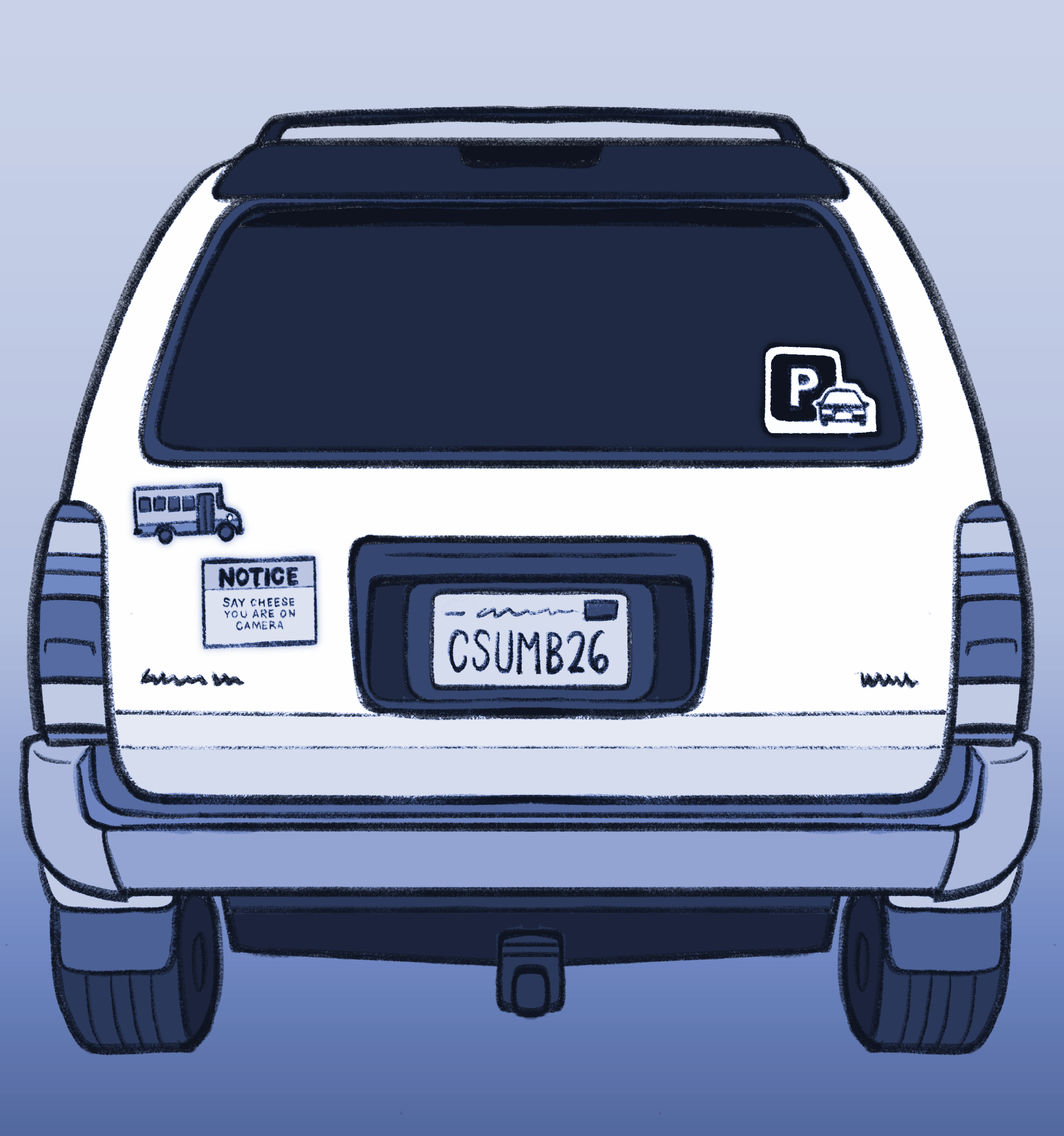
The tiered pricing model is just one of CSUMB’s long-term parking plans, which could take months or even years to actualize. Another major goal discussed by Dixon and other speakers was the implementation of a License Plate Recognition (LPR) system. LPR would replace existing infrastructure for both permits and citations.
The anticipated impact of an LPR system on students seems mixed; it would enable a digitized permit process linked to vehicle license plate numbers, eliminating the need to print and display temporary permits while waiting days or weeks to receive a permanent copy. However, the LPR system would operate mainly through camera networks in campus parking lots, meaning stricter enforcement through an automated citation process. Concerns were also raised about added complexity for those who may not always use the same vehicle for commutes.
Immediate changes to parking will be relatively minor. Lot ID will be improved on apps like Park Mobile, and CSUMB will evaluate options for expanded ADA parking. The school is also considering designating Lot 28 – ironically, the lot outside the World Theater where many attendees of the town hall were parked – as an employee-only lot. That proposal was met with cheers and applause at the event, which was attended mostly by staff and faculty.
Once the parking segment wrapped up, Melissa Jarnagin walked through plans for changes that will impact campus life and road safety in the coming years.
As for campus, there will be upgrades to existing cameras in residential halls. These upgrades will focus on the camera’s data storage system, which ensures the security and retention of that camera footage. Residential halls will be the first buildings to get these upgrades, as a direct response to the racist graffiti that was drawn on residential halls last semester. However, they will not be the last. There are plans to upgrade and install new cameras throughout the rest of the campus in the coming years.
The CSUMB safe app has been updated to include Narcan locations. This addition functions with the med kit map. It pinpoints places on campus that have Narcan available and directions to the nearest station.
Immediate changes to road safety will be seen through flashing pedestrian crossing signs implemented at all crossing signs, as well as the revisiting of all signage to guarantee they are clear and comprehensive. The longer task of repaving and relining streets to ensure road safety is planned and will start construction in the 27-28 fiscal year.
Derek Martin informed the audience about CSUMB’s 2030 sustainability goals, giving updated data on all three goals and ambitions for the coming years. More information on the progress made toward those goals will be available soon.