
Cuts to the Supplemental Nutrition Assistance Program (SNAP), as outlined in Donald Trump’s Big Beautiful Bill, won’t have any immediate effect on benefits, especially for students, says Basic Needs Hub Coordinator Robyn DoCanto.
So her message to Cal State Monterey Bay students is “apply, apply, apply.”
On July 4, 2025, Trump signed his Big Beautiful Bill into law, which consisted of a multitude of budget and federal cuts, including a reduction of approximately $186 billion from SNAP funding through 2034, according to estimates from the Congressional Budget Office.
Despite this, changes to CalFresh (CalFresh is California’s name for SNAP) are not happening this year, and income limits increased on Oct. 1.
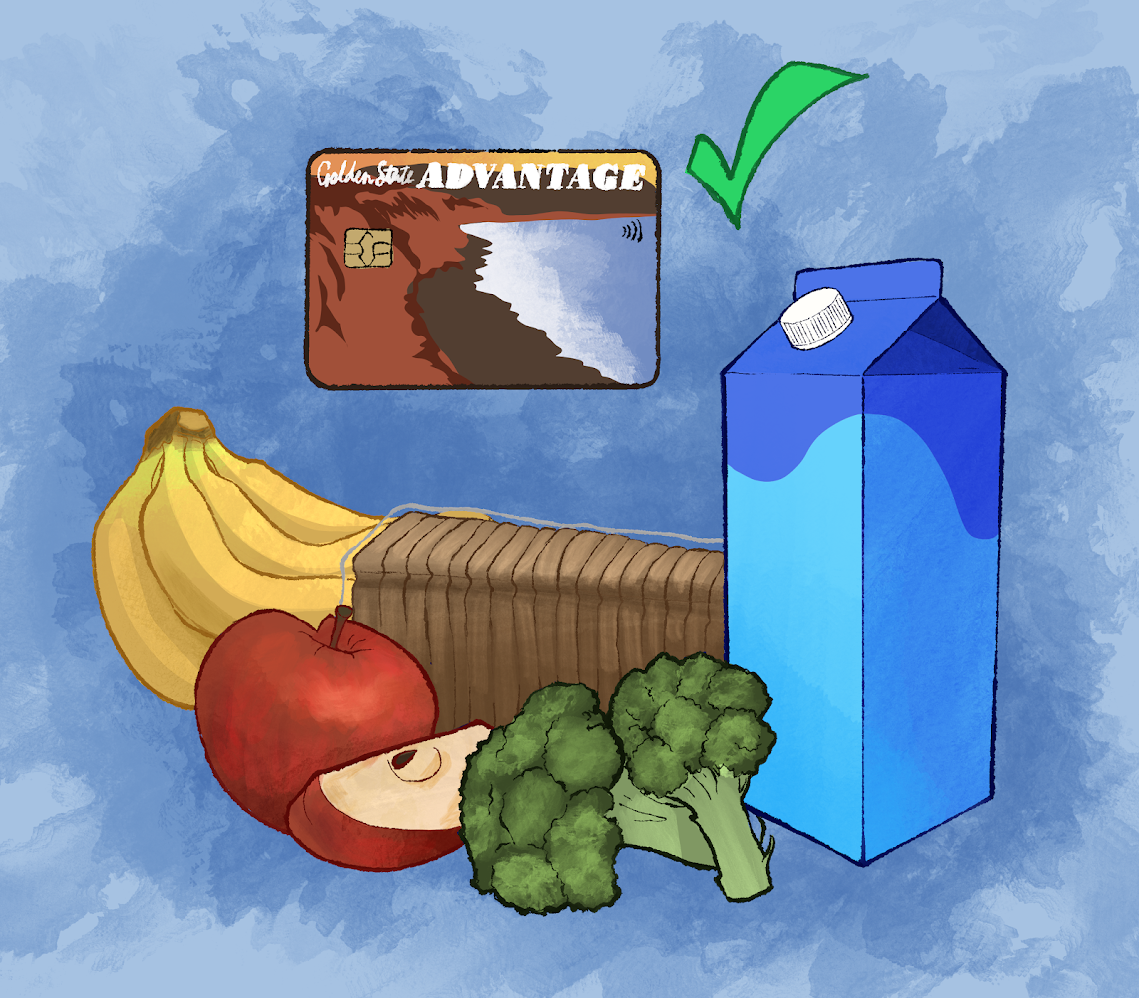
CalFresh is a federally funded program that provides monthly food benefits to those who qualify. The program is aimed at helping users buy nutritious foods. DoCanto says that we’ve moved away from “food stamps.”
“We’re no longer in the time where we’re counting out literal pieces of paper for unprepared produce and frozen meat. That is the stigmatized version of ‘food stamps,’” DoCanto said. “It’s like a debit card now, it’s so easy to use.”
According to a few All County Letters sent by the California Department of Social Services to county offices, “these changes have various effective dates, and in some instances, no effective date is specified.” While action will be required by County Welfare Departments in relation to SNAP services, benefits will not be cut, and changes are most likely to happen in 2026.
For a household of one, which students typically are, the net monthly income eligibility standards will now be $1,305; it is currently $2,510. The maximum CalFresh allotment will be $298.
DoCanto is passionate about CalFresh’s offerings and encourages students to sign up. “I just love CalFresh so much, and I love telling students about it. I really want students to know this is free money for groceries,” she says. “There are billions of dollars that go unused every year, and just in Monterey County, there are millions of dollars that go unused for CalFresh.”
In a 2024 article from Newsweek, Nourish California estimated that there are 2.7 million people eligible for CalFresh who do not receive benefits. If 2.7 million Californians got approved for benefits, California would receive an extra $3.5 billion in CalFresh money from the federal government yearly.
In federal fiscal year 2024, SNAP helped 5,380,000 California residents, or 14% of the state population (1 in 7).
“There’s nothing that you have to do or be like a math wiz to [use the card],” said DoCanto. “You take your food up to the register, they scan everything and you swipe your EBT card.”
While at the register, users will be prompted to select “SNAP Food” or “SNAP Cash” – if purchasing food, select food. The grocery store’s Point of Sale systems are set up to identify what is and isn’t food. After swiping your Electronic Benefit Transfer (EBT) card, money for groceries will be deducted. If non-food items are purchased, a remaining balance will come up that cannot be paid for with the EBT card.
DoCanto also shared that many other benefits come along with signing up for CalFresh, such as the Museums for All program. With an EBT card, many museums and aquariums, including the Monterey Bay Aquarium and the Monterey Museum of Art, are free for cardholders. For more information on participating museums, check out this website.
Students at Cal State Monterey Bay can receive assistance from the Basic Needs team to apply for CalFresh benefits. In the last academic year, Basic Needs helped over 250 students apply, and has already helped 113 students apply this semester.
“That is in large part because we built an entire benefits Cal team of students, who are helping students apply,” DoCanto said. “We are very dedicated to getting students these benefits and ensuring that their food security levels are increasing every single day.”
It is very rare for students who apply with Basic Needs’ assistance to get denied benefits. DoCanto doesn’t want students’ fear of being denied benefits to stop them from applying. “We are not eligibility workers and we are not social workers. We are a community-based organization that helps folks apply.”
CSUMB students will soon receive an email if they may be eligible for CalFresh benefits. “That [email] is going to over 3,000 students,” DoCanto said. “Over 3,000 students will be receiving a letter from us that says, You may be eligible for CalFresh, here’s how to apply. That’s really exciting.” Basic Needs is working with the Financial Aid office to determine the list of students who are eligible for benefits.
While cuts aren’t happening in 2025, DoCanto believes any cut will have a hit on campus, but is confident in the university’s dedication to Basic Needs. “We are really lucky that our administration at CSUMB is very supportive of our students and ensures that programs like ours continue to grow. No matter what happens, students are supported here,” said DoCanto.
DoCanto also said that the California State University system does a lot with the legislature in support of Basic Needs. Students can talk to their Basic Needs Senator or talk with Associated Students to be representatives of the student voice, if they are in contact with legislative representatives.
DoCanto says, “We will never stop our support of students and getting their food security very high – that is our number one goal. Regardless of what happens to these programs, we are here to support them always. We really take ‘no Otter goes hungry’ very seriously.”