
By Alison Erisman
Gen Z continues to shop at thrift stores despite not fully understanding the environmental impacts. But why? Cal State Monterey Bay (CSUMB) students revealed the top reasons they shop second-hand—and it’s not to save the planet.
Thrifting, an eco-friendly alternative to modern consumerism, is a practice that has become a staple among many college-aged students. While sorting through a sea of donated goods may sound tedious, for thrifters, it is well worth the wait. Not only does it save a few bucks, but the thrill of the hunt counteracts the negative consequences of trend cycles and fast fashion.
David Santizo, a second-year kinesiology major, was quick to voice the two reasons he shops second-hand—for style and affordability. Santizo wore thrifted pants he purchased for roughly $15 from the popular retailer Goodwill.
With confidence, he argued sustainable fashion is a trend gone mainstream for Gen Z and claimed most would agree. “Word spreads,” he sighed, “then it becomes a fashion thing. They’re not thinking about the environmental impacts.”
In a recent report by the United States Environmental Protection Agency (EPA), the total amount of textile waste landfilled reached a record high of 11.3 million tons in 2018. The EPA estimated the recycling rate of clothing and footwear was merely 13 percent of all textiles generated.
According to the 2023 ThredUp Resale Report, thrifted wardrobes reduce carbon emissions by an average of 25 percent. For each clothing item bought second-hand instead of brand new, 23 billion gallons of water and over 2 billion pounds of carbon dioxide can be saved annually.
The interest in having a thrifted closet is largest among Gen Z, as about 83% plan to shop second-hand or express interest too, says Capital One. This estimation is 10.7% higher than other age groups. On average, 2 out of 5 items in Gen Z’s closet are thrifted.

For students at CSUMB, thrifting is a coveted way to express personal style on a budget—but could it simply be another trend taking the internet by storm?
Hanna Smith, a third-year cinematic arts and technology major, sported a fully thrifted outfit with pieces from Goodwill and CSUMB’s own Basic Needs. Smith said she thrifts for fun and to find unique clothes at a cheap price.
When asked about Gen Z’s motivation to thrift, she replied, “I think it’s definitely a fad.” She also felt that “post-COVID, it became a really big thing.”
Today, “it’s kind of a weird elitist thing,” Smith said with concern.
While students briefly acknowledged thrifting’s positive environmental impacts, sustainability struggled to earn a spot as a top incentive for this Gen Z fashion craze. As a cultural obsession, students said thrifting has also resulted in negative implications.
Pictured: Capron (Left) said, “No matter how bad it looks, try it on.” Santizo (Right) suggested thrifter’s “Look through everything.”—Photos by Alison Erisman


Jadelynn Capron, a first-year liberal studies major, described how “once thrifting got really popular, all the thrift stores started bumping everything up.”
She believed trend-followers “narrow down the options for people that are looking to thrift for the right reasons.” Capron, wearing a sweater from Goodwill, explained she thrifts for cheaper options that are still true to her personal style.
Some thrift stores have increased prices and experienced gentrification due to consumer demand. However, the SPCA Benefit Shop Monterey County has kept fair and competitive prices for all items, according to its Vice President of Marketing and Communications, Beth Brookhouser. “We do very, very little advertising for our shop,” she said and pointed out how the non-profit has kept growing every year.
“We have customers who come every single morning because they don’t want to miss out on an item. That’s how quickly things move through our shop,” said Brookhouser.

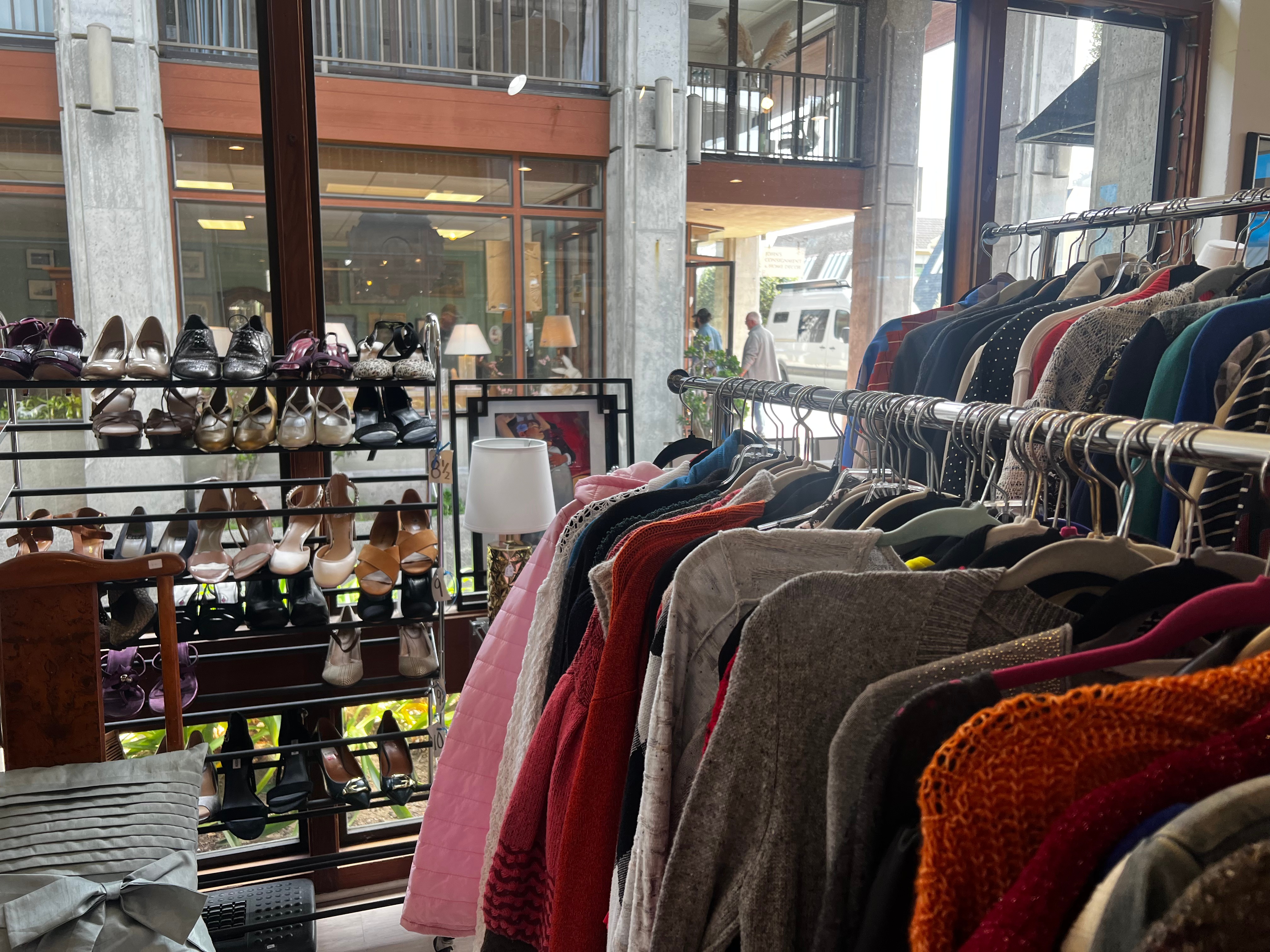
Shoppers search for hidden gems amongst racks of clothing and shelves of kitchenware.
Image taken at the SPCA Benefit Shop Monterey County—Photo by Alison Erisman
As Smith indicated, 2020 was a transformative year for thrifting. Brookhouser commented on the impact of this shift – “I think it’s been all positive.” With customers and donated items coming in at a surplus, the shop has flourished thanks to Gen Z.
The connection between thrifting and sustainability is not as evident nor important to young adults as one would hope. Now, it has become a matter of how long thrifted fashion will be a trend before it becomes another thing of the past.
There will always be a need for sustainable practices, such as thrifting, in our lives. With increased education for thrifting’s largest audience, Gen Z can make this trend a lasting habit.