
As Halloween draws near and excitement builds over costume choices, many are left wondering: Is the outfit they’ve chosen truly appropriate for the occasion?
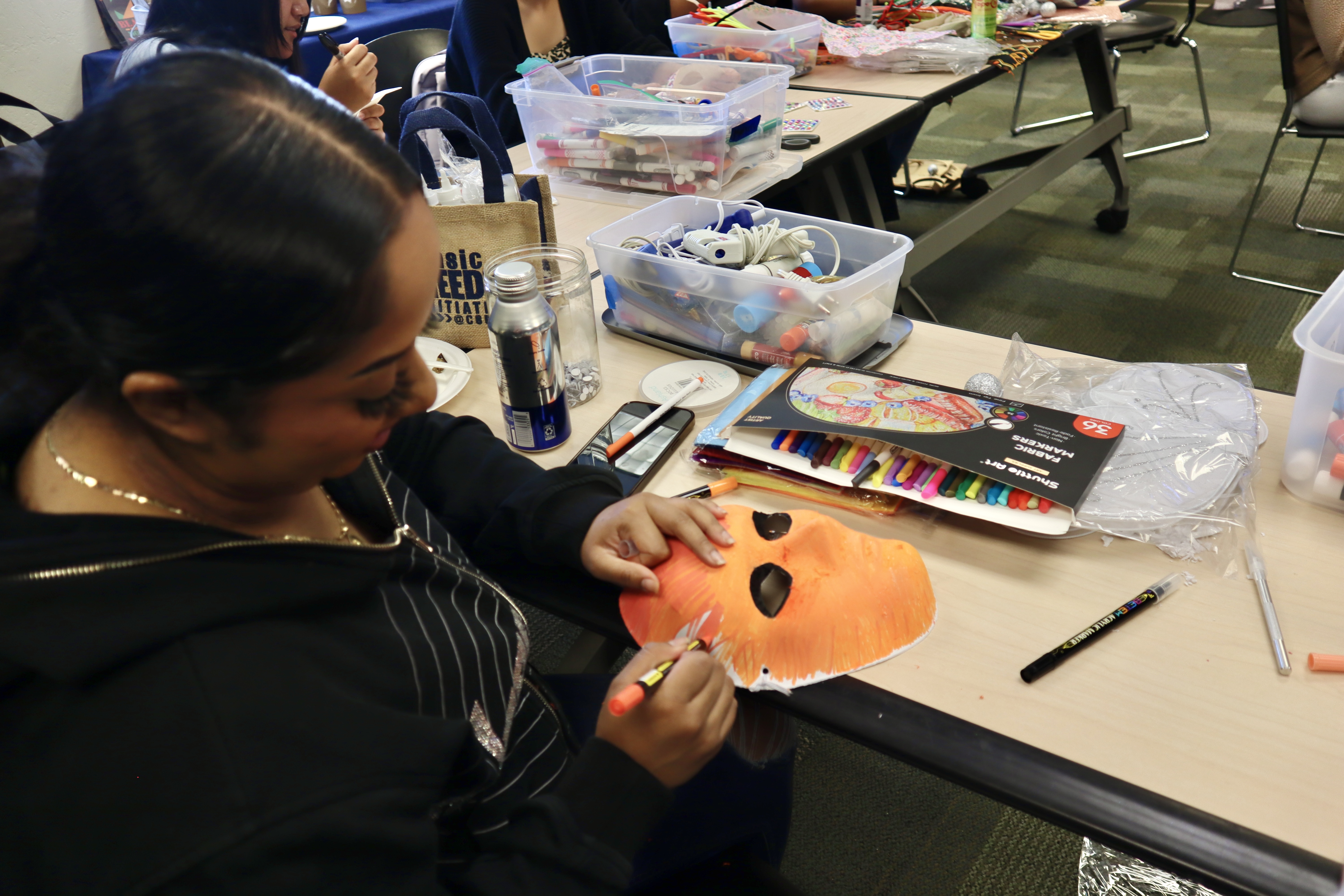
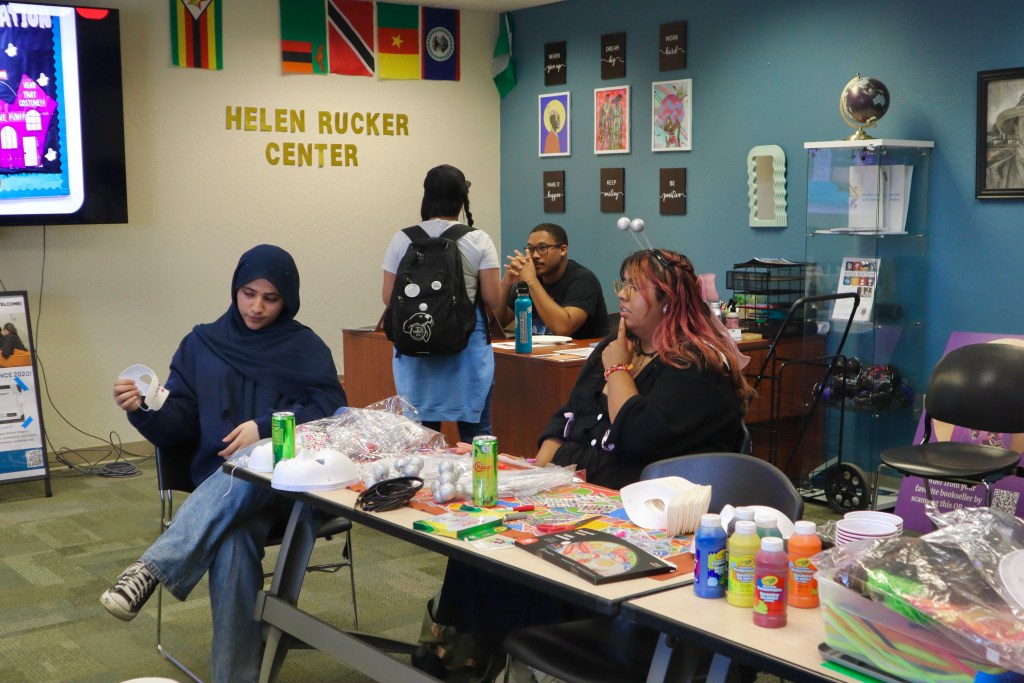
On Wednesday, Oct. 16, the Learning Living Community (LLC) and the Otter Cross Cultural Center (OC3) gathered paints, masks, markers, other DIY materials and an informative PowerPoint presentation encouraging an open dialogue to discuss cultural appropriation in costumes.
Attendees arrived at Helen Rucker Center for Black Excellence and were greeted by hosts Chrystina Utley fourth-year psych major and residential advisor for the African Heritage LLC and Sarah Wafa second-year Computer Science major and cultural engagement student coordinator at the OC3.
As students and staff trickled in, over 10 participants gathered to engage in dialogue on the topic. The dialogue began with Utley and Wafa describing what cultural appropriation is on their PowerPoint: “Use of an element or elements of one culture or identity by members of another culture or identity without respecting its origins or using it simply for aesthetic or personal gain.”
Utley and Wafa shared not only costumes that were examples of cultural appropriation but also explained why the costumes fell in this category. Examples included the stereotypical poncho and hat with a mustache, dressing as a Native American, dressing as a sexy nun or other religious concepts as a costume and others.
The presentation also included examples of costumes that would be appropriate to wear and why they are appropriate.
Included were the following questions to ask yourself while choosing a costume:
- Is this an example of cultural appropriation that you have come across in your own culture?
- Is this an example of cultural appropriation you’ve witnessed during Halloween?
- Is it supposed to be funny? (What is the joke?) (Does it make fun of or stereotype certain races or ethnicities?)
- Is it a specific character? (Would you have to change the way you behave to dress as the character?) (Is there a behavior change solely because of the character’s race?)
With over half of the students enrolled in CSUMB being of a minority group according to calstate.edu, these conversations have never been more important. “It’s important to bring awareness to people, and it’s early enough where you are able to change your costume. Since you have now learned what cultural appropriation is [you] have the time to choose costumes that aren’t cultural appropriation as well. And it’s close enough to Halloween where you remember it as well,” Wafa shared.
The importance of the dialogue at Cal State Monterey Bay comes not from just being mindful of other people’s cultures and beliefs but from the knowledge that as an institution we do have a diverse group of students. Utley expressed the importance of this event saying, “We are an HSI (Hispanic-Serving Institution) and this school does have a very big presence on being diverse and we welcome community. So it’s really important to bring that to people and other ways to maintain that diversity while also respecting the people of the school that have different cultures.”