

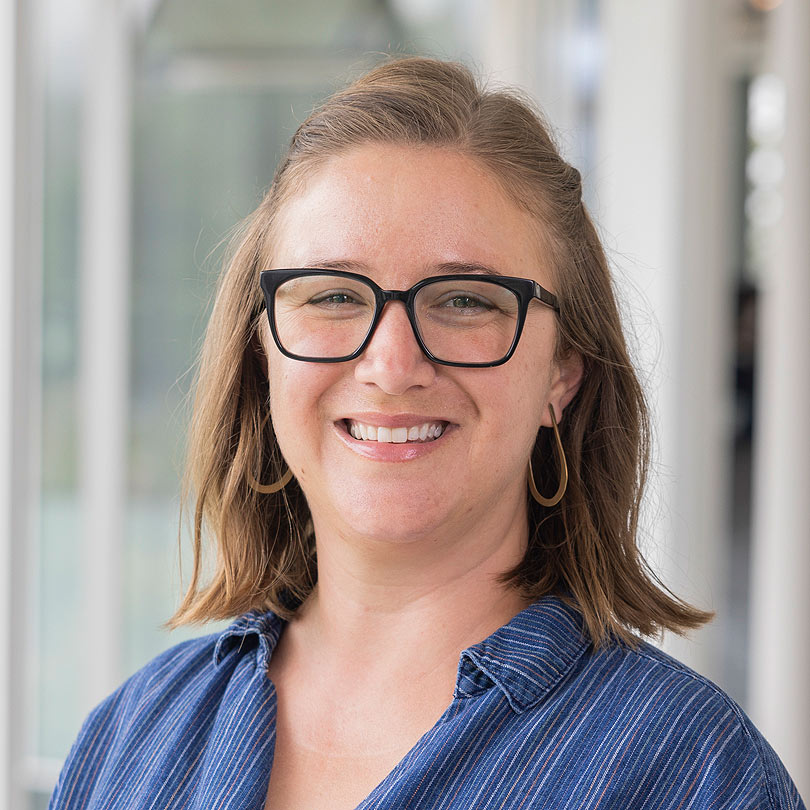
To understand the Palestine-Israeli conflict, it’s important to understand the historical context and nuances of the region according to Sara Salazar-Hughes, an associate professor of Global Studies at California State University Monterey Bay.
“Hamas cannot be used interchangeably with Palestinians or with Muslims,” said Salazar-Hughes. She also rejects “the claim that criticism of Israeli state policies and actions is anti-Semitic.”
“It’s very clear that neither Hamas nor Israel have a long term plan for how this ends beyond trying to eliminate one another. And that doesn’t work, [it] just leads to more violence.”
About 75 students tuned in Nov. 17 to Salazar-Hughes’ Zoom “teach-in” on the conflict. Salazar-Hughes worked in Palestine for over a decade, primarily studying Israeli occupation in the West Bank. Her doctoral degree is in cultural and political geography from the University of California Los Angeles.
While she recognizes that the creation of Israel in 1948 “was trying to make up for the horrors that Jewish people had faced in Europe … they were doing it at the expense of people who had nothing to do with [those horrors].”
Instead, “the establishment of Israel created the largest refugee population in the world, 80% of Palestine’s population.” This, Salazar-Hughes said, is “the context of the attack on Oct. 7 and is how Hamas understood that attack. Which again, is not a justification, but is important to understand.”
Though many are quick to cite Hamas’ Islamic ideology as a motivation for its attack, Salazar-Hughes maintained “it is not a religious conflict … this is a conflict over land. It’s a story of settler colonialism and resistance to it.”
“When you set out as a settler population to establish a state, and the establishment of that state necessitates the forced removal and elimination of people who are already living in that territory, structurally, that is settler colonialism,” she explained.
According to Salazar-Hughes, it was these dire circumstances, rather than religious extremism, that fueled the latest attack. “There is no military solution to this conflict. There has to be a political solution that entails liberation for Palestinian people.”
A commonly suggested resolution to the conflict is the two-state solution, in which two sovereign, autonomous states are created. Salazar-Hughes points out, however, that this solution is problematic given the fragmented nature of Palestinian territories created by current Israeli settlements.
“When anyone talks about a two-state solution, that means that Israel gets to annex parts of the West Bank that are settled by Israelis. The Palestinian state that would be created in such a solution would be made up of disconnected spots in the West Bank and the Gaza Strip.
“I don’t think a two-state solution is a realistic way forward,” she clarified. “Most Palestinians that I talked to think that the only way forward is one binational state that includes both Israelis and Palestinians as equal citizens..
“We have to get out of this mindset that only one of these two people can be free. We can’t roll back history. We can’t roll back time,” said Salazar-Hughes.
“Gaza has been under blockade by Israel for 30 years and has been under a complete aerial land and sea siege for 16 years. Half of Gaza’s 2.3 million Palestinians are children, most of them under 16, so they’ve lived their entire life under an Israeli siege with really just the bare minimum of things that people need to survive and sometimes not even that,” she said.
“It’s very clear that neither Hamas nor Israel have a long term plan for how this ends beyond trying to eliminate one another. And that doesn’t work, [it] just leads to more violence.”
While it is hard to find a solution, she says that “if we want to change the cycle of violence, we have to change the underlying conditions. We can’t just attack Hamas.”
“The fact that the United States sends so much aid to Israel is a big part of what maintains the ongoing violence and the cyclical nature of this conflict … the U.S. is funding this conflict and maintaining this occupation.”
If students are interested in this topic and want to listen to the entire teach-in, it is now published as a podcast on the CSUMB Otter Pod website. You can access it through https://digitalcommons.csumb.edu/otterpod/17/.